Get the complete slide deck from our Good Decisions session with Shawn Stapleton, PhD, Director of AI Lifecycle Management at MD Anderson Cancer Center. These slides go deeper than the replay—offering frameworks, references, and real-world examples you can use to shape your own strategy for human–AI collaboration in healthcare.
You’ll see how MD Anderson is thinking about when to introduce AI, who should be in the loop, and what skills clinicians need so that AI strengthens, rather than erodes, clinical practice.
Inside the Slide Deck, You’ll Find:
- A clear, working definition of “human-in-the-loop” for healthcare AI systems
- Side-by-side breakdowns of human and AI reliability challenges—and how they can quietly amplify each other
- The three core skill sets that make a capable human-in-the-loop: AI literacy, solution-specific training, and deep domain expertise
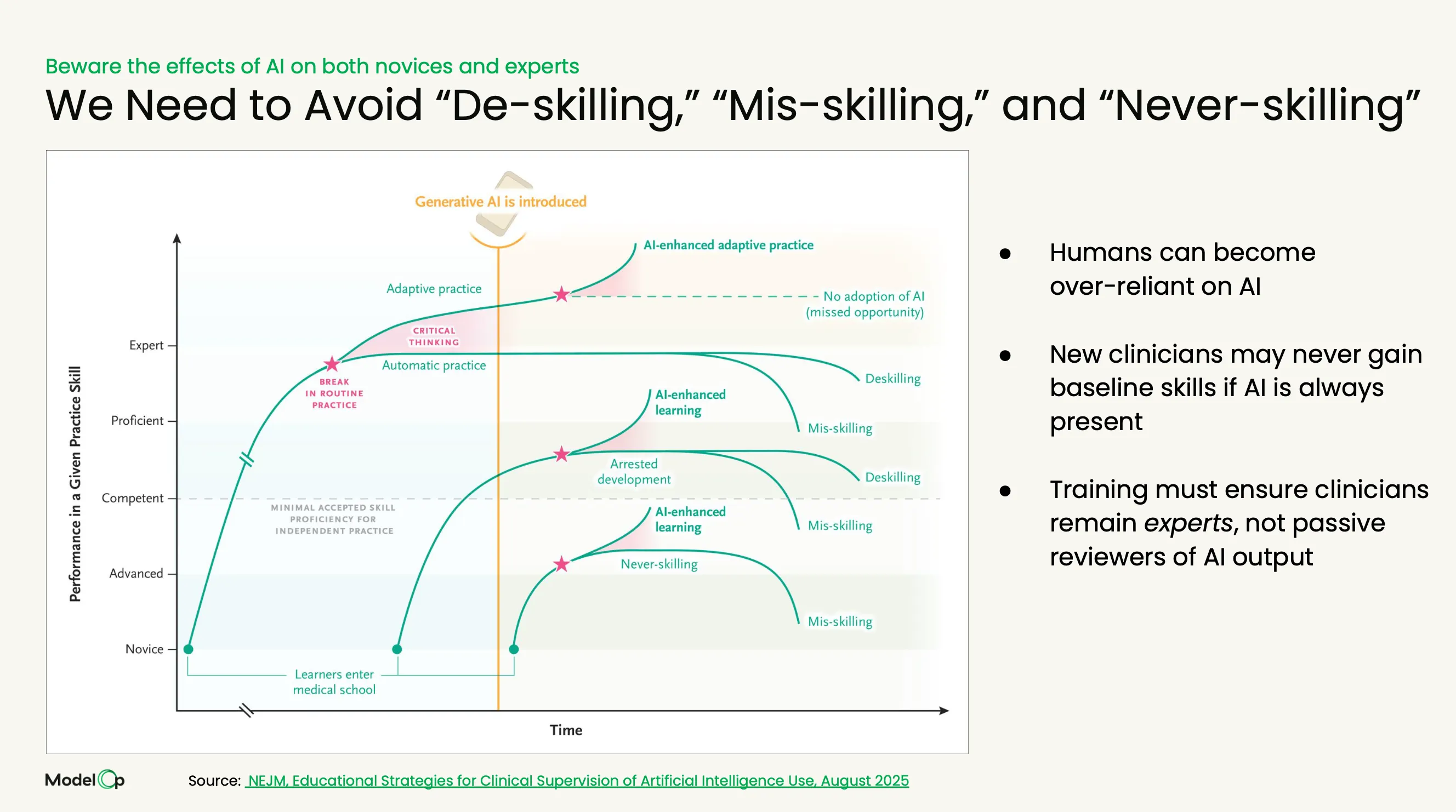
- The concepts of de-skilling and “never-skilling” backed by recent literature, and what they mean for training programs and supervision
- Real-world examples from healthcare, including AI scribes and imaging/triage use cases, with a candid look at where things can go wrong
- Practical guidance on how AI lifecycle management and governance support meaningful oversight, auditability, and sustained trust in AI systems
If your organization is looking to move beyond slogans and build measurable, meaningful human-in-the-loop practices, this slide deck is a concise, reference-rich starting point.


