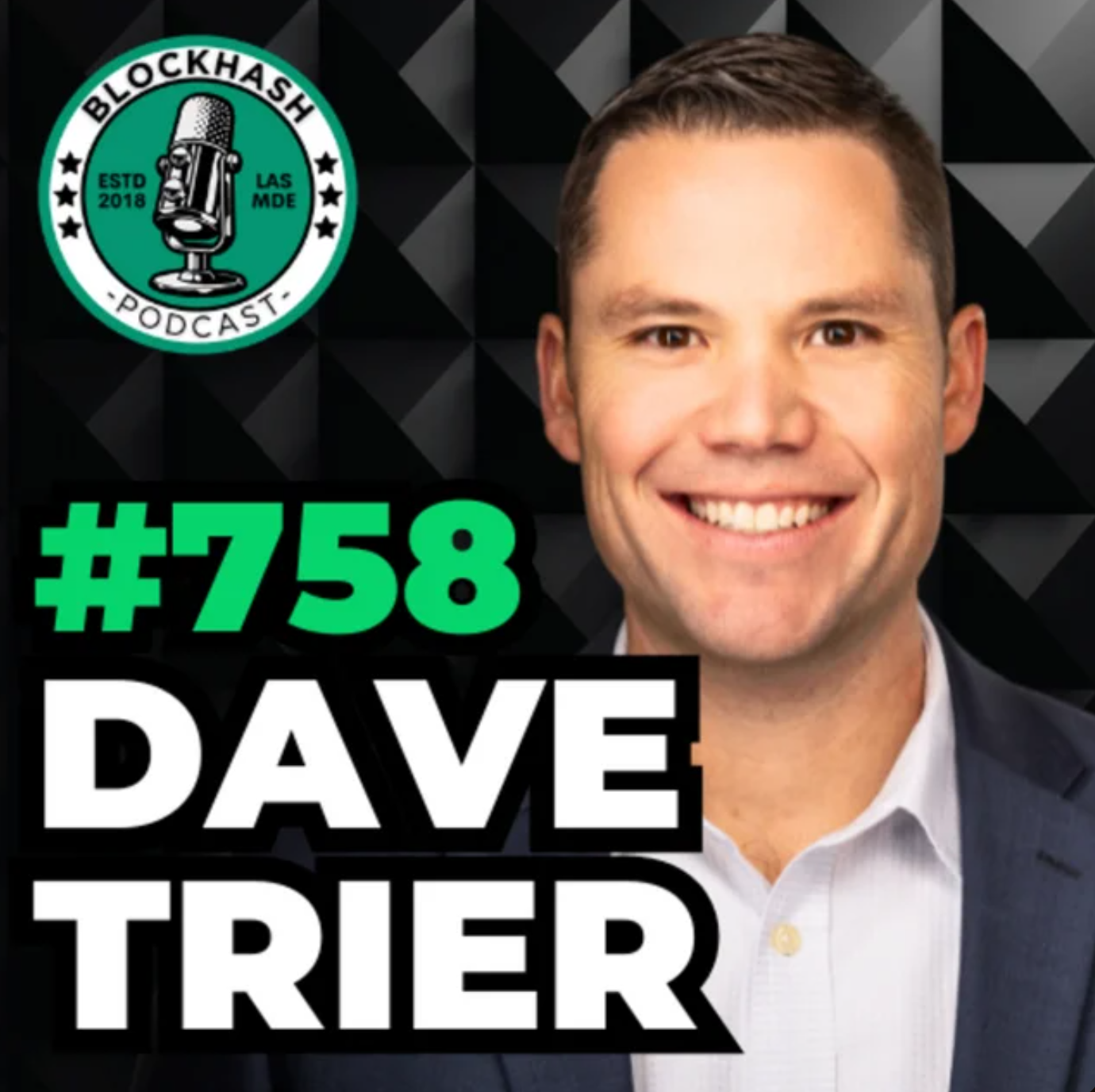

In this episode of The Digital Healthcare Experience, host Chris Civitarese talks with ModelOp's Dave Trier about why healthcare feels enormous pressure to adopt AI while any wrong turn carries real consequences. Dave frames the sector as the intersection he finds most compelling: massive opportunity across clinical, back office, and operational work, paired with the highest risk profile because decisions land on patients and populations. He identifies three recurring obstacles when a health system tries to adopt AI across many departments — the absence of an organization-wide blueprint, choosing the wrong tool for the job, and change management, which he thinks people badly underestimate, because asking a clinician to trust a machine with a step is different from asking them to fill out one more form. He explains why manual review can no longer keep up: small governance teams of two or three people now face hundreds of requested use cases, and these are risk-bearing assets rather than dashboards. His prescription is a defined process everyone trusts, a single pane of glass inventory, risk tiering, structured reviews, testing of your specific usage rather than the vendor's, and continuous rather than one-and-done governance. He closes with a personal note about navigating six specialties for a medically complex child, and what AI could do for parents drowning in clinical literature.
- Why healthcare carries both the largest AI upside and the steepest risk profile.
- The three obstacles: no organization-wide blueprint, wrong tool choice, and underestimated change management.
- Why asking a clinician to trust a machine differs from asking for another form.
- How demand changed: from an isolated data science team to every department requesting AI.
- Why small governance teams facing hundreds of use cases cannot review manually.
- AI solutions are risk-bearing assets, not dashboards, and need deeper review.
- The building blocks: process, single pane of glass inventory, risk tiering, reviews, testing, monitoring.
- Why you test your specific usage rather than trusting the vendor's testing.
- Continuous governance rather than the linear one-and-done model of IT or data governance.
- Two speeds: fast sign-off for pilots, the full process for production scale.
- Why the leadership impulse has to come with urgency, from a CMIO, AI lead, or visionary CTO.
- A parent's view: using AI to reconcile guidance across six specialties for a complex case.
[00:32] – Introduction
[01:44] – Dave's background and what drew him to healthcare
[02:15] – Hitting the same barrier at the finish line
[03:23] – Why healthcare specifically
[04:10] – What is at stake and how the risk profile differs
[05:06] – Crawl, walk, run — and keeping humans in the loop
[05:52] – Common challenges adopting AI across many departments
[06:19] – The missing blueprint
[07:18] – Choosing the right tool for the purpose
[07:41] – Change management, and why it is underestimated
[09:12] – Why manual approaches no longer work
[09:47] – The demand problem: every department wants it
[11:11] – Small governance teams facing hundreds of use cases
[11:52] – Risk-bearing assets need deeper review
[12:52] – Creating the blueprint
[13:31] – A consistent process everyone can trust
[14:19] – The playbook analogy
[14:36] – The single pane of glass inventory
[15:08] – Risk scoring and tiering
[15:36] – The assessments and reviews
[16:08] – Testing your usage, not the vendor's
[17:22] – Why governance is circular, not linear
[17:54] – Continuous governance
[18:27] – The spreadsheets and email objection
[19:43] – Safety versus speed
[20:40] – What actually slows things down
[21:35] – Governance as an enabler
[22:12] – Running two speeds: pilot and production
[23:17] – Where the leadership comes from
[24:00] – Urgency as the operative word
[25:03] – The vision for AI governance in healthcare
[25:45] – From idea to approved pilot in days
[27:17] – A personal story: six specialties and one complex case
[28:25] – Where AI can really shine for families and care teams
[29:05] – One governance pathway regardless of complexity
[30:34] – Why legacy policy documents fail
[31:17] – Why this is achievable today
[31:44] – Where to find ModelOp
[32:27] – Closing remarks
Chris Civitarese: Welcome to the digital health care experience brought to you by Taylor Healthcare. Subscribe now and stay on the forefront of the digital healthcare revolution. Hello, and welcome to the digital health care experience podcast presented by Taylor Healthcare. I'm your host, Chris Civitarese, and today I'm joined by Dave Trier, vice president of product at ModelOp.
Dave has more than 20 years of experience as a data and analytics, model operations, and AI strategy expert. Prior to joining ModelOp, Dave held several technology and data leadership roles, including VP of advanced analytics services at Teradata. And while with Accenture, he led large scale enterprise transformation projects helping pioneer the space of model operations. With his two decades of technology and product management experience and multiple patents to his name, Dave helps ensure ModelOp continually delivers cutting edge innovation, helping enterprises implement and drive business transformation with groundbreaking technologies from AI and big data to cloud computing.
Welcome, Dave. It's great to have you on the show.
Dave Trier: Thanks so much. Pleasure to be here. Yeah.
Chris Civitarese: And I'm really excited for this episode just as you and I were talking kind of backstage. You know, we've talked a lot about AI on this podcast, and so much, of the conversation naturally relates itself to governance and operations and so on. So having an expert in the space, I think, is something that our listeners are really going to enjoy. So great to have you on. And let's start there.
If you can, share a little bit more about your background and what drew you to focus on the space of ModelOp's and AI governance, particularly in the challenging space of health care. Yeah. No. Thanks.
Dave Trier: I really appreciate it, Chris. As a little bit of background, I've been, as Chris mentioned, been doing large scale delivery for over twenty years with the largest enterprises across the planet. And for the past about dozen or so years, it was focusing in on the data science, ML, now AI arena, just helping these large organizations to use these transformational technologies. But we always kept hitting this barrier.
We kept hitting this spot that is we developed these very innovative and really groundbreaking and business driver type capabilities, but then we get stuck. We get stuck with whether it's governance or stuck at the finish line around how do we just put these into usage. Right? We just want to actually have the business teams use these or the operational teams start to use those.
So we just, again, routinely just hit these barriers that say, okay. Well, there's gotta be a better way. Right? As they always say.
So we just just kind of analyze, alright. Well, what are the problems? What are the implications? What is slowing us down overall?
And time and time again, it came down to the oversight, the governance, the processes in place. So that's what really drew me to is, like, we have all of this huge buzz around usage of AI and ML, but, again, it's sitting there at the finish line or close to the finish line and not getting to the point where you can actually use it. So that's what really drew me to this is an opportunity. This is an area that large organizations, they need capability to be able to provide that governance and oversight so they can actually take and get the fruit of the AI, you know, promise, if you will.
Now health care especially has always been a passion of mine. I was an engineer by trade. Would have loved to be in the biomedical space. It just didn't exist back in the day.
Right? So health care has always been a background and passion of mine, both professionally as well as personally. But also health care, in particular, on AI governance space and AI just in general, health care is a huge opportunity to really reap the benefits of AI, whether it's clinical, whether it's back office, whether it's operational, just a massive opportunity. But they also have some of the biggest risk as you can appreciate because it's you're dealing with patients and consumers.
Right? So for me, just having that nice, you know, intersection of this opportunity with AI, but also how do we bring this to market with the right level of oversight is what really drew me to AI governance, particularly in the health care space. Yeah.
Chris Civitarese: And I know with health care, you've I've heard you say before that health care organizations feel, what I'll refer to as, like, this massive need to use AI, but that any wrong direction can have a pretty significant repercussion. So can you give us some real world sense of what's at stake and how the risk profile of AI adoption is different in health care compared to other industries?
Dave Trier: I mean, I think it goes without saying, but I'll say it is that in health care, you're affecting humans. Right? You're affecting patients. You're affecting consumers at large.
Right? The and the population as well. Right? There's certain health care decisions can affect entire populations.
So just by that nature of dealing with humans and the many of the decisions impacting humans, obviously, the risk goes way up. Right. Any wrong decision, especially as it deals with clinical or research and development or population health, you know, type scenarios, again, the risk level just goes up exponentially. So just by its nature dealing with humans, right, that it can have huge repercussions.
Now most organizations, as you can appreciate, they're crawling before they walk, before they run around this, that they're making sure they're doing the right thing of keeping humans in the loop, use it for guided decision making as opposed to autonomous decision making. So, again, that's all been taken into account by the organizations that are using it. But as I said, there's a big upside, but there's also a potential big downside if it's not done correctly because we're dealing with humans. Right?
Yeah. Absolutely.
Chris Civitarese: And, obviously, that's a very unique challenge, if you will, from a health care perspective. Obviously, also a very unique opportunity to really affect people's lives in a very positive way. So, certainly, I can certainly appreciate, your perspective on both of those sides of the coin, if you will. And obviously, you identified some of the challenges with organizations adopting technology like this.
Let let's talk a little bit more about that. As you mentioned, there are barriers to adopting these next generation tools and tool sets. But from your perspective, talk to us about some of the most common challenges you're seeing when big health care systems try to adopt AI across multiple teams, multiple departments, some of the challenges that go along with that complexity. Yeah.
Dave Trier: So I'll hit on a couple points here. The first challenge that I see, which is a fundamental challenge, is just not having the right I call it the blueprint. Right? Not having the right understanding of here's the processes that we need to put in place.
Here's the different teams that need to be involved. Here's the different types of reviews and type of, you know, validations, activities, legal security, IT, risk compliance, just not having the right blueprint that scales across the whole organization. Yeah. There's there's likely some policy document.
Legal, of course, gets involved. Procurement and supply chain get involved if you're buying something. But in order for all the teams and all the departments to use it, there has to be, like I said, that blueprint. What's the what is the pattern that we're using to go from, hey.
We've got this team that sees this great idea to use, AI for identifying pulmonary embolisms to how do I actually put it into practice? So first, I should say the challenge is just having that organization wide plan or blueprint to go from idea to usage. The second one comes into play is around the technology side. Right?
So there are a number of different technologies and just getting an understanding of, okay, what's the right technology for the right purpose as opposed to just blanket saying, hey. AI will solve that problem. Right? So just making sure that from a technology perspective that we're choosing the right tool in the toolbox.
And then the third, would say, is change management, which has a huge implication in the health care space. Just because AI could make something easy doesn't mean it will make it easy. Right? Right.
Because you have your existing processes. And those processes, especially if you're talking about care management, involves different well, first off systems, whether it's EHR or others. It involves, you know, clinicians, you know, from nurses to physicians to radiologists and technicians and the like. And so they have their existing processes that they're used to that have to scale.
And so there is just naturally anytime you're changing anything, AI aside, there's naturally a change management process. But AI has a particular nuance to it where in the past, it's a you know, the process might be, okay. Well, just involve this human additionally or fill out this paper. Right.
But now we're saying, okay. Now let let a technology let a machine take a step here. So as part of it, it's not only just the traditional change management of what's changed. It's now you gotta trust that this machine is going to actually help you with that process.
So it I think a lot of folks underestimate that the change management involved of AI in health care. But, again, that's just one of the three typical challenges that I see from, as I said, just having that right process and blueprint to make sure that you're doing all the right things, that every team is doing it, to the technology decisions that need to be made, to, again, that final change management portion, which is paramount in order for, again, all the different team members to adopt it, if you will. Yeah.
Chris Civitarese: So you touched on a couple of things that I want to go a little bit deeper on, and I want to come back to the notion of a blueprint and talk a little bit more about that. Before that, that last point that you made in terms of every single department in health care wants to benefit from these tools, radiology, nursing, operations, the back office, you know, supply chain, take your pick. Everybody's looking at AI to optimize workflows. And as you said, there's a notion of scale to the technology and being able to incorporate it.
Talk to us a little bit more about why that manual approach of, hey. We need another form or we need some more bodies to throw at this problem. Why those types of manual approaches? Why they don't work anymore?
Yeah.
Dave Trier: It's it just comes down to the demand. Right? The demand I've never seen this before. I've been doing this for over twenty years.
I've been through the days of cloud and digitization and, you know, analytics. I've never seen technology move this fast, to be quite honest, where every aspect, as you said, of the organization is demanding to use it. Like, in the past, especially in the like I said, I've been in the data science analytics space for a long time, and it was really isolated to this silo of data scientists or it's just a machine learning group. Right?
And they're kind of over here doing their thing in the lab. Right? Yeah. Yeah.
Very niche. And it's just sitting over there doing their thing in the lab, you ask somebody in supply chain about, oh, yeah. Yeah. Just talk to them.
They know what to do there. But now supply chain is like, no. No. No.
I want to use this. I want to use this tool. It's going to make my life better. You talk to, you know, again, the different technicians.
I want to use this. It's going to make my life easier. You talk to clinicians, and, again, they're naturally pessimistic by nature. Right?
Sure. But when they think about, okay. This could help me. This could help me to just save a couple of minutes a day.
They want to use it. Right? So what's different about this is the demand. Right?
As you are rightfully pointed out. There's so much demand in it. And in the past, as I said, there's a small group of people doing it. You could have a governance group or an oversight team just looking after that, you know, the onesie, twosie type solutions or AI solutions that are coming in the door.
But now when you've got every single team, as I said before, from the, know, those that are sitting at the desk doing nurse triage to those that are doing r and d and, you know, radiology, et cetera, they're all asking for it. So you got this just massive onslaught. Like, a couple of our customers, they have a very small governance team, couple of people. Right?
For a many-thousand-employee organization. And so they just got this onslaught of hundreds, I kid you not, hundreds of use cases saying, I want to use AI for this. So, naturally, a manual approach doesn't work, especially because it's not just that, hey. This is a new application or I'm developing some new BI dashboard.
These are risk bearing assets. Right? They have a lot of inherent risk in them. So you have to go and analyze those in a much deeper fashion than it would be for a traditional application or a dashboard or other kind of traditional technology.
So because of that risk bearing nature, you have to do a thorough review. And, you got this massive demand, and you do have to do these types of reviews, something just naturally is going to default through, which is often, okay, we just can't keep up. So in a long-winded way of saying, manual approaches can't work. Too much demand, too much risk involved.
You have to have something that is streamlined. It's effective. It's scalable, but also make sure that it gives the confidence and trust across all the different parties that we are doing the right thing, that we are being responsible about how we're using this, that we can trust the output, we can trust the process. Hey.
That change management will there will be change management, but it's all for a good reason, and it's all done properly according to, again, the responsible nature of our program. Yeah. It's really fascinating.
Chris Civitarese: And some of the elements that you touched on there seem like it also kind of it lends itself to the notion of creating a blueprint for governance. I think about, you know, small staffs that are responsible for kind of guiding an organization here. I think about, you know, the to your point, the demand partners, that are involved in large organizations. And I'd I'd love for you to talk a little bit more about creating that blueprint prioritization and how all that works in your experience with health care.
So let's talk about that if we can. Talk to us a little bit more about creating that blueprint for AI governance and the foundational steps that health care organizations can start with to get them going in the right direction. Yeah.
Dave Trier: It all starts with just, first and foremost, like I said, having a process. Right. Consistent process that you can use. Yes.
It can take different, you know, forks in the road if it's a clinical facing versus back office or if it's a higher risk than, say, a lower risk, but you still have a process that's identified. And part of that process is bringing all of the relevant stakeholders to the table to say, listen. Let's define this process. We can't keep doing this in an ad hoc way.
Let's get all the inputs that we need so that you trust the process. So if an AI solution goes through it, you don't need to put a second and third and fourth pair of eyes on it because we trust the process. Right? And so you're bringing together data, legal, risk, security, IT, architecture, procurement, et cetera.
And they all contribute and say, okay. Great. Here's our plan. This is our blueprint.
Again, using a American football analogy, here's our playbook. Right. We are going to trust the playbook. We're going to go execute in the playbook.
Everybody's got a different role on the team to go and execute that every single play, but we got the playbook. Right? Now some of the key elements of that so, again, identify the process, the playbook or blueprint. Then it comes from there is just having an inventory.
I call it the single pane of glass so that if anybody has any question about any AI solution across the organization, regardless of whether it's just submitted as an idea to whether it's being used or whether it's retired, you're able to go to it and say, yep. I can answer it. Here's what it's used for. Here's the specific approved usage.
Right? Here's where we went through the approval process, literature, et cetera, et cetera. So just having that single pane of glass, some call it an inventory of just everywhere AI is being used. The second key component is doing a risk scoring or tiering.
Right? So that you can know and say say, okay. Well, this is a an application that's actually used for clinical purposes. Maybe it's helping in radiology to an identify a pulmonary embolism, if you will.
Let's do a risk tiering or scoring. Identify, okay, is this more of a higher risk area or a lower risk area? So that you just have an understanding of, k, what is the level of risk? It's higher risk.
Obviously, we need some more due diligence and follow ups, et cetera. So, again, start with the process, have everything in the inventory, do a risk tiering, and then helping to facilitate a variety of different assessments and reviews. As I said, I rattled off a bunch of them. Data, if you're using any data, especially if you're sending any data that's going out to a vendor that you're using, looking at it from a risk perspective.
So you're actually looking at the algorithms and what is being done there and the usage thereof. You're looking at security. You're looking at how it fits into your ecosystem architecture, et cetera. So a series of reviews as part of that process.
And a very critical number four is testing. So just making sure you're testing it. Especially, a lot of people say, okay. Well, I just bought it from, you know, this vendor.
I'll just leave the vendor's name out here. I bought it I bought it from a big name. They're well respected. Right? They're incredibly well respected.
That's great. And the vendor said, oh, I tested it. We're good. It's it's it's awesome.
Right? We're good to go. That's great, except that it's not about the actual AI technology itself. It's about how you use it.
It's about the usage. Right? And how you use it specifically in your organization. As a great example, ChatGPT that came out.
Right? You can use it for a thousand different usages. Sure. And you may not decide to use it for all those a thousand, but what you as a health care organization decide to use it for, that's what's important.
And so that's making sure that part of the testing is testing that specific usage to make sure you understand what the benchmarks are. And then you're monitoring that from an ongoing perspective. You're identifying any risks that need to be followed up, et cetera. So just those are, like I said, some of the building blocks of just having the blueprint or plan, putting that register inventory in place, risk tiering, the different assessments, reviews, testing, and ongoing analysis of those risks, I.
E, monitoring against those risks.
Chris Civitarese: It's interesting to me because I guess when I came into this conversation, I thought that process would look a lot more linear, for lack of a better term. And what you're describing is really kind of more circular where there has to be a bit of a feedback loop and where you're kind of constantly looking at this from all of those different angles. Is that fair to say?
Dave Trier: Hundred percent. And when people think about governance, they think about IT governance, corporate governance, maybe data governance. That's a linear process. You go from here to I did my process, check it, done.
I'm off. Good. No. No.
No. With AI and just analytics in general, I call it continuous governance. It's not a one and done. It's continuous governance where because you're constantly with AI especially, because it is so probabilistic and based on the data in the real world, if you will, you don't know everything at a time.
You can't test everything ahead of time. So you're constantly seeing how it's working, how it's, you know, how the different users are working with it, what information is sent, what data is sent, and how it's actually responding to that information sent. So for us, it's about continuous governance, not this linear path. So you couldn't have said it better, Chris.
Chris Civitarese: Part of that has to be also that the technology itself is just evolving at this breakneck pace that maybe is Absolutely. I mean, just unlike anything that we've ever seen. Is that fair?
Dave Trier: Oh, a hundred percent. When when I just I did my favorite objection that I get is that, oh, you know what? We could just manage this with spreadsheets and emails. I was like, really?
Okay. Well, have you did you even hear of agents, like, eight months ago? No. Okay.
Well, did you even hear of LLMs, like, two years ago? Oh, no. I was like, oh, okay. Well, you do realize that the pace of innovation here is incredible.
So how are you going to keep pace when there's a new flavor of AI every single day? There's a new vendor. There's a new technology. There's a new protocol.
Like, how do you keep pace with that? How do you do that with a spreadsheet? So, yes, the that's really where the reason we as a company exist, to be quite honest, is because of a couple things. One is it's risk bearing, like we said.
Yeah. Second, the pace of innovation is so fast. And third is that organizations, if they don't have something like a ModelOp, they get into this place where they just hit that barrier, that wall that I mentioned at the very start where you just go and develop something really cool, and then it just sits there because it's being blocked by all the different types of lack of trust at the end of the day that exists within a large organization. It's really fascinating.
Chris Civitarese: And one of the dynamics in play here seems to be this, you know, kind of butting heads between safety and speed. You talk about health care and the need for, the industry to understand risk profiles and so on and so forth. And then at the same time, we have this technology that's changing on a minute by minute, day by day kind of a basis and can just bring this, I mean, incredible value to patients and to our communities. So talk to me a little bit about what you're seeing in terms of that conflict between safety and speed, and how do you recommend organizations strike the balance of avoiding risk without slowing innovation to a crawl?
Yeah.
Dave Trier: It's it's it really has been what most customers and really the industries say before they come to us. They say, governance slows things down. Right? It's just going to slow down our speed.
I get why we need to do it, and we absolutely need to do it, but they just naturally think it slows things down. But in reality, what we found over the past seven years doing this, it's not governance that slows things down. It's the lack of that plan, the lack of those processes, the lack of the automation that slows things down. Because what happens is that without those consistent processes and automation in place, everything is one off.
Right? You go and say, okay. Well, I got this cool new AI solution that's going to help with clinical notes. Right?
And there's like, well, go talk to John. John John knows he's smart about AI. Go talk to John. And John says, okay.
Well, we gotta look at the algorithm. So he looks at the algorithm and he say, okay. Cool. Then you go to IT, say, hey.
Let me deploy. He's like, oh, no. You're using sensitive data. Go talk to data.
And go talk to security because it's going outside our firewalls. Oh oh, well, security says, you know what? Did you get your t's and c's signed off by legal? So it's this kind of ad hoc onesie twosie.
That's what gets the bad rap, if you will. That's what slows things down. And so first and foremost is just overcoming that false notion that AI governance can slow things down. Actually, it's an enabler.
It can speed things up if you have the right process automation in place, where at the end of the day, you're saying, okay. We if we put this in place, all those different teams, you can trust. You can trust that it's safe. You can trust that we're following the policy.
You can trust it. So in that way, by naturally going through this process, you are trusting that it's doing the right thing, and you say, great. I'm not going to slow things down. We went through the process that we all agreed upon.
So that's just the first thing I would start with is that it's actually an enabler when done right. The second thing I often coach our customers around is the whole safety versus speed. You can actually have two speeds, as I say. One speed is that, okay.
I'm just trying to POC or pilot this particular AI solution. Fantastic. Right. You can go full speed ahead, quick sign off and review to make sure this is in alignment with our just kind of general strategy, but go.
You can only go so far. Right? You can't go all the way around the racetrack, but you can go to a certain point. In that way, you are absolutely enabling innovation, enabling speed.
When you want to get to the point, okay. I've got this thing. We actually have some of the benefits, some of the outcomes, some of the assurances that we were a little unsure about. Right?
Then you can go through the formal process. But, again, that's all been optimized and streamlined to get it out to scale. So those are really those, a couple of different ways that we help to coach our customers around, hey. Use this as an enabler.
And then second, have that two tracks, right, of just the quick speed for POCs and pilots just to make sure that the thing even works and does what you expect, and then the full scale, which, again, you take advantage of the automations, et cetera. et cetera.
Chris Civitarese: I think that's so fascinating. I mean, because what you're describing is that when you put a process like this in place, you're actually kind of breaking the tension between safety and speed. You're you're enabling organizations to sort of serve both of those masters, for lack of a better term. It's it's it's really interesting.
Organizations that you've worked with that do this really well, is that direction that comes from I mean, the tippy top of the executive suite, is that a really savvy, you know, IT department that can drive that forward? Where does the leadership typically come from in the engagements that you do as part of ModelOp? Yeah.
Dave Trier: It's it varies. I wish there was a one answer for all of it, Chris, but it actually varies. It does come from a top down approach. And they're basically saying, listen.
We're not just going to accept the status quo. That is not going to get us where I want to. So they the executives, have a sense of urgency. Urgency is the word that's most important.
Urgency to say AI will be transformational. We cannot accept the status quo. We need to just throw out that old playbook or lack of playbook and say, okay. Here's how we're going to do continuous automated governance.
Here's how we're going to bring all the parties to together to the table. So I think it the at the top level, it does start with top down. Hundred percent agree with you. But it's top down saying, this is transformational to our organization, and we need to have the urgency to overcome this.
Not just to develop things, but the urgency includes having that ironed out process across all the different teams. So, again, it varies who that party is for each type of organization. It could come from a chief medical information officer. It could come from an AI lead.
It could come from a CTO that's visionary or a combination of all of them. But it's that kind of personality and persona that is really what's helping to pave the way for what it could be and what it should be. It's really interesting.
Chris Civitarese: I mean, obviously, there's so much potential, in this space. And as you say, you know, it was just a couple of years ago that, you know, ChatGPT burst onto the scene and look at what's happened in just the last couple of years. And by the time that this episode airs, you know, people are going to be looking around and saying, my gosh, look at what just happened in the last couple of weeks. So I'm curious.
If you were to kind of look in your crystal ball and think a few years out, what's your vision for what we could responsibly and effectively achieve in AI and health care? What should that look like? What does that look like a few years out from now? Yeah.
Dave Trier: So I'll first start on what it looks like from a AI governance perspective, and then I'll talk about just broader in terms of AI Perfect. In health care. So from a governance perspective, just just picture this. Right?
You have every single user employee resource within a large health care organization. They know where to go. They can come and even use a chat interface to say, I've got this great idea. I want to use this vendor to help us to identify pulmonary embolisms.
I'll just come back to that analogy. And I want to just go do the right thing. So tell me what to do. And the system comes back, and it says, great.
Who are you going to use it for? Well, I'm going to use it specifically for these types of, you know, patient population eighteen to forty. Answer a couple questions. Fantastic.
System says, you know what? Based on that, this is a little bit higher risk rating, but don't worry. Here's what you need to do. Here's a couple things forms you need to fill out, a couple evidence.
We've gone and passed this already over to our data legal, and it just that's all taken care of you. We're going to have an SLA to get back to you in two weeks. And in two weeks, you'll have this approved so that you can go and do your pilot. Right?
So imagine that sort of world where you go from idea to having something approved, say, for pilot within, you know, a matter of days, maybe a couple of weeks at max. And even on the scale side, same sort of thing. Like, you're just you're just it you're brought along. You have an assistant that's coaching you through the process, get you through what you need done so that you can, again, have the trust across all the different organizations.
Yeah. So that's what I would say is and then there's nothing that's preventing that. It's just absolutely having the right leadership to say, you know what? A company like ModelOp, they know what they're doing.
Right? And we can get to that vision. That's not twenty years out. That's here today.
So that's where I would just say on the vision for, AI governance and health care is. Now broader, what is AI and health care? Well, this is where, actually, I bring a little bit of my personal story. So I do have, several I have four children and one of which is has a medically complex case.
So for me as a parent, just being able to use AI to try to help to sift through just a myriad of different types of information from I we go to at least six different specialties for my son. Right? And so just being able to sift through all the information and say, okay. We went to this specialty clinic.
They identified, okay. He's got this particular need. Okay. Great.
Well, how does that interact with the other specialties? What does that mean if we go into this particular medication? What do we need to do to affect his overall care plan? Right?
So just giving, especially consumers and me as a parent, just some of that information to just, like, help me not have to read eighty pages of clinical literature to try to understand and piece it. Because because, again, our care team can only go so far. And they're absolutely great, but they deal with, you know, hundreds of patients. So how do we enable well-informed parents like myself or just consumers at large?
And that's where AI can really shine. Right? It can really help to sift through the noise to be able to identify the correlations across different teams, care teams, and clinical specialties, et cetera, just to allow me to have the confidence to know it's like, yeah. This is the best thing for my son.
This is the best thing for my family at large. So, hopefully, that gives a little bit of indication. Obviously, on the on the care team side, you know, obviously, I would love to help any of the physicians, the nurses, and all of the care team just to make their life easier. Right?
Just the burnout rate, know, is through the roof. So anything to make their life easier, I'm on board with. So, anyway, long winded answer, but hopefully gives them insight.
Chris Civitarese: I mean, it's it's such a, what you're describing is I mean, AI, it sounds like from your perspective, is going to empower, I mean, just so many different facets of what this ecosystem can be from, you know, parents and family members who are an obvious extension of the care team to the care team itself to kind of everything that happens in terms of the experience, with a health system, not clinically related in terms of, you know, the back office, the financial, so on and so forth. There's just so many different touch points. And I think it is just so fascinating, to look at trying to pull all of this together from a governance perspective under sort of one, you know, model. Because I guess when I when I had this, conversation with you, booked, I was really thinking that it was going to be, well, you know, every department kind of looks a little bit different.
Everybody is but what you're describing is that I mean, the vision for this is we can put together processes and, examples where whether you're talking about something really, really big or something pretty benign in terms of, you know, the risk profile of a particular solution, it can all follow that same sort of governance pathway. As you say, you know, higher risk, you might have to check these boxes and go here, here, here, and here, and fill, you know, talk about this, this, this, and this. But generally speaking, your your vision and ModelOp can help deliver really a cohesive strategy for or an organization regardless of that complexity, which is something that I would not have expected. Yeah.
Dave Trier: And that's the reason that we knew this was an opportunity at the beginning because there is a way to do that. Right? And most organizations are stuck in they've defined policy, and it's really, really comprehensive and overbearing to some point. Right.
And it took them twenty-three years to get it right, and it's it's a legacy of, you know yeah. Yeah. Yeah. Here's our hundred year plan.
Right. So to so you have that side of it. And then how do I make this scalable and streamlined? Because if we don't and it takes twelve months to get something out the door.
By the time it's there, it's it's no longer relevant. Right? AI moves that fast. So you really are serving, like I said, that intersection of speed to market to get the value with that continuous governance.
That's where we play. That's where we've been doing with our customers for years. And it I guess the just to the last thing I would say to your audience is that it is possible. Right?
Don't think this is a twenty year plan. This is actually something that's achievable. We do it day in and day out. So please, again, that word around urgency, just take that away is that this is possible, and you really can't wait anymore because all of your teams are demanding this.
The demand is too much. You can no longer wait. That's fantastic.
Chris Civitarese: Dave, this has been just a really wonderful conversation. I'd I'd like to ask you just to, let our listeners know, and share with the community where they can go to find more information about ModelOp. And, certainly, if there's anything else that you want to share and close with, floor is yours.
Dave Trier: Thanks, Chris. Really appreciate it. So thanks again for having me. As mentioned, I work for ModelOp.
So please go to ModelOp dot com, m o d e l o p dot com, find all the information about our company, what we've been doing in the health care space, et cetera. Feel free to reach out to me. I'm on LinkedIn, fairly active. So I love to talk about this, as you can tell, all the days long.
So feel free to reach me. Happy to have a chat at any time. That's awesome.
Chris Civitarese: And thank you so much again, Dave, for joining us. It was just an absolute pleasure to have you on. Thanks, Chris.
Dave Trier: Have a good one.
Chris Civitarese: And thank you also to our listeners. If you enjoyed the conversation, please like, share, and subscribe to help us keep growing the show. And if you'd like to learn a little bit more about Taylor Healthcare and the digital health care experience, you can go to taylor.com/digital-healthcare. That's our show for today.
And until next time, this is Chris Civitarese wishing you health and good cheer. Take care. To learn more about Taylor Healthcare, please visit taylor.com/digital-healthcare. This podcast is for educational purposes only and is provided with the understanding that it does not constitute medical, legal, or financial advice or services.
The Digital Healthcare Experience is produced by Naomi Schwimmer. Podcast music by Nicholas Bach. more engaged the patient, the better the outcome. But how do you help patients get engaged?
Introducing iMedHealth from Taylor Healthcare, digital tools that increase patient engagement at every touch point. Go to imedhealth.com to learn more. Find the link in the show notes.