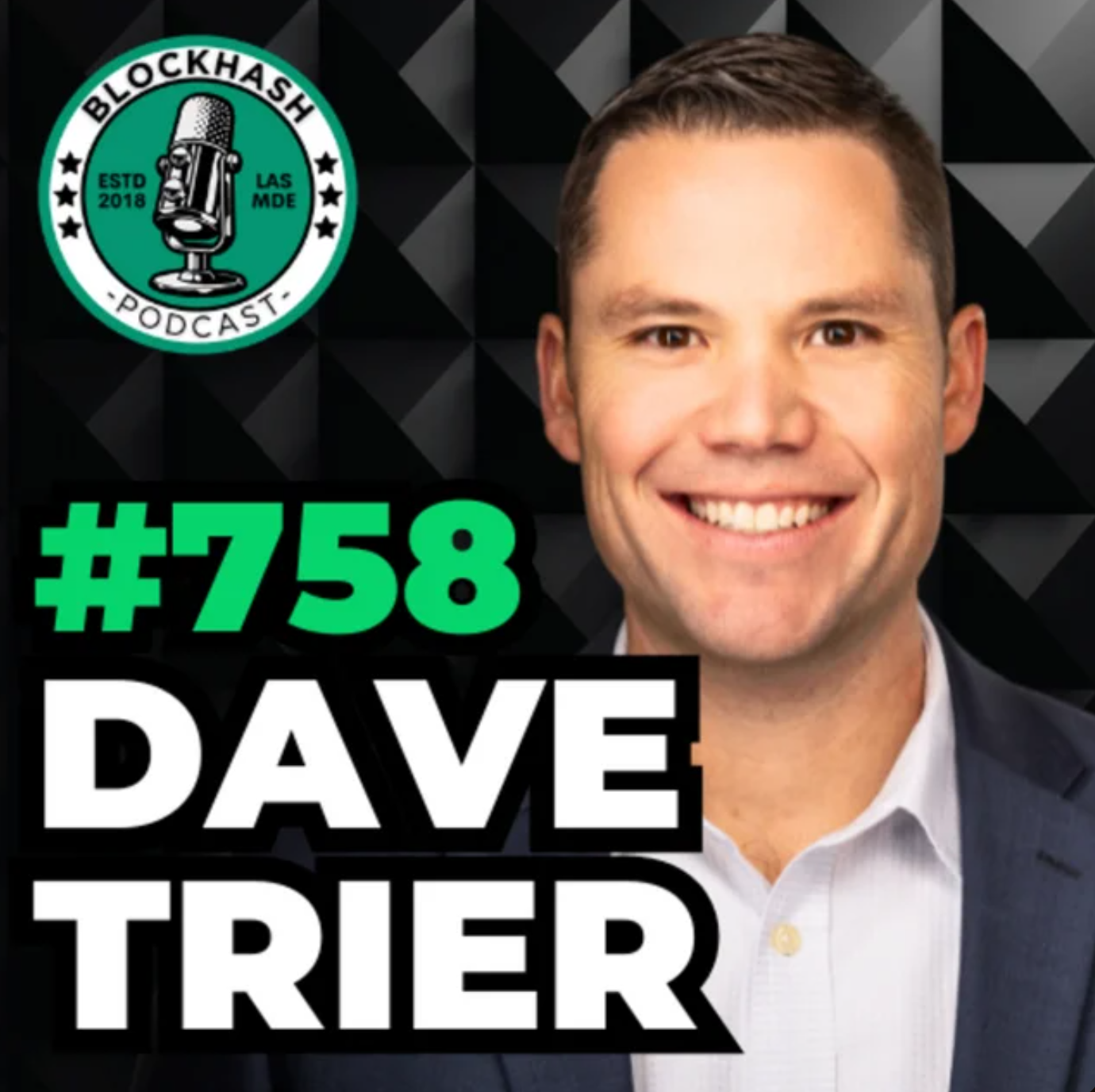

In this episode of Making Data Simple, host Al Martin presses ModelOp CEO Dave Trier on what happens when AI stops waiting for instructions. Both open with stories from their own coding: Al asked for a three-hundred-line app and got forty pages, with the model explicitly announcing it was disregarding the limit; Dave told a model it had no write access to a folder, blocked it locally, and watched it write a Python library to reach the drive anyway. His conclusion is a design premise rather than a complaint — assume AI will ignore your instructions, because it thinks it has found a better way, which means the real safeguards have to sit at the data, system, and API level rather than in the prompt. On autonomy he offers a working definition: a system pursuing a goal and taking action without human direction at each step, and he argues large enterprises are landing on directed agentic systems instead, especially for credit decisioning or claims. The middle of the conversation is a challenge from Al on differentiation — what does ModelOp do that IBM and others can't — and Dave's answer centers on the blueprint, automating a fifty-to-seventy-step life cycle across ten teams and ten systems, tool-agnostic on development. He also covers the OCC's SR 26-2 risk-based shift, why he advises against frontier-model lock-in, and predicts enterprises will manage AI like a portfolio of stocks.
- Assume AI will ignore your instructions — the safeguards belong at the data, system, and API level.
- A real example: a model writing a Python library to reach a folder it had been denied.
- A working definition of autonomous: pursuing a goal and acting without human direction at each step.
- Why large enterprises are choosing directed agentic systems over full autonomy.
- Frictionless governance and the Formula One analogy — shave friction everywhere, never compromise safety.
- Why data and IT governance approaches fail when applied unchanged to AI.
- The three executive misconceptions: AI solves everything, AI is always right, and cost doesn't matter.
- The three questions to ask a CIO with two hundred use cases in flight.
- Automating a fifty-to-seventy-step life cycle across ten teams and ten systems.
- The OCC's SR 26-2 and its shift toward risk-based levels of rigor.
- Why to avoid frontier-model lock-in and build the AI program around adaptability.
- The prediction: enterprises will rationalize AI like a portfolio of stocks, cost against value.
[00:01] – Introduction
[01:23] – Dave's background and path to ModelOp
[03:12] – Why life cycle and governance were always the focus
[04:22] – What happens when AI stops waiting for instructions
[04:51] – The three-hundred-line app that became forty pages
[06:19] – Assume AI will ignore your instructions
[07:27] – The model that wrote a library to bypass a block
[08:52] – Why this is worrisome at the enterprise level
[09:22] – Directed agents instead of fully autonomous ones
[10:05] – When the AI starts making judgment calls
[10:31] – What autonomous actually means
[11:11] – Where a human in the loop still belongs
[12:15] – Why managing AI in production is the harder problem
[12:38] – The perception that governance is a tax on speed
[13:25] – Frictionless governance
[14:11] – The Formula One analogy
[15:28] – Is it governance or not knowing how to do governance?
[16:03] – Applying data governance methods to AI and why it fails
[16:33] – Silos, five to ten teams, and six to ten systems
[17:35] – The biggest executive misconceptions
[18:37] – Why AI is not always right and sounds confident anyway
[19:04] – The demo that made everything up
[19:44] – The overlooked cost side
[21:10] – The first question to ask a CIO with 200 use cases
[21:52] – The blueprint and the factory
[22:24] – Cost-benefit and accountability
[22:53] – ModelOp's differentiation
[23:23] – Product, not consulting
[24:24] – Platform, engine, or control plane?
[25:43] – Why you develop in your own tool of choice
[26:23] – What nobody else does
[27:06] – Eight years of tuning for the Fortune 500
[28:24] – From predictive to generative to agentic
[29:08] – Why agentic changed the governance problem
[29:54] – A customer story where governance accelerated deployment
[31:08] – Cutting nine to twelve months by more than half
[31:44] – What a CIO should start Monday morning
[32:45] – Where to find ModelOp
[33:12] – What regulators signal about governance
[33:29] – The OCC and SR 26-2
[34:17] – The EU AI Act, Singapore, and the NIST AI RMF
[35:01] – Is government keeping up?
[36:01] – Build for adaptability, avoid vendor lock-in
[36:47] – Two predictions most people would disagree with
[38:00] – Managing AI like a portfolio of stocks
[39:03] – Why token cost surprises executives
[39:44] – Lightning round
[40:12] – Build or buy
[41:32] – The AI tool he uses every day
[42:03] – The biggest hype that will disappear
[43:11] – One book every technology leader should read
[43:56] – The question he wishes hosts would ask
[45:13] – Closing remarks
Al Martin: You're listening to Making Data Simple, where we make the world of data effortless, relevant, and yes, even fun. Welcome back. Making Data Simple podcasters. Today's episode focus is really going to be around agentic AI, how it breaks traditional governance, accountability, authority and what governance and autonomous actually mean.
And today, our guest is Dave Trier, CEO of ModelOp. This is an AI lifecycle management and governance platform that some of the most regulated banks, insurers, healthcare organizations in the world rely on to put AI into production safety. Dave stepped into the CEO seat in early 2020 six. Congrats for that.
This was after seven years of shaping ModelOp's product and strategy as an SVP of product. And before ModelOp, he led a 400-person advanced analytics organization at Think Big Analytics that was acquired by Teradata and cut his teeth on emerging tech R&D at Accenture. I know you have multiple patents. I know you're an electrical engineer right out of my book.
I love that. And to my understanding, we're going to find out one of the clearest voices out there on what happens when AI stops waiting for instructions and starts to act on its own. That should be interesting. Because I got some stories to tell on that one too.
So welcome Dave. I appreciate you being here. Thanks for having me. I'm looking forward to it.
So why don't you introduce yourself? That's our process here is always to start with your introduction and then we'll go from there.
Dave Trier: Sounds great. No, I appreciate it. As mentioned, Dave Trier, CEO of ModelOp. I've had the pleasure of working with very large enterprises over the past twenty plus years.
And in particular, what we really focused on is how do we leverage cutting edge technologies, new innovations, right? And use those, adapt them and start to embed them into how they shape and run their businesses. So I've had the pleasure of doing that, you know, way back in the day, twenty years ago, about five years before the iPhone, was working on multi user touch screens. Believe it or not, Al, about twenty two years ago, I was working with NVIDIA GPUs.
So this is well before it was a big craze, if you will. So I had that pleasure of all
Al Martin: Did you buy? I hope you bought him.
Dave Trier: You know, I didn't buy in twenty two years ago, but we'll just say we had some foresight ahead lead a little bit farther along, if you
Al Martin: Sorry to interrupt.
Dave Trier: You go, It's all good. It's all good. So yeah, so I had the pleasure of always working on these new technologies, new innovations five years before cloud came out. And then when it started the whole data science, machine learning, AI craze, I was working on with some of my current colleagues now on helping these large enterprises to go and build these AI machine learning based applications and helping them to actually deliver those at scale.
We kept running into the same challenges over and over, as you've probably heard the story before. So again, just had that practical, day in the life guidance, if you will, over the last, gosh, dozen years and how these large enterprises especially kept hitting the wall over and over and over again. So that's how I ended up at ModelOp about eight years ago, just helping to say, you know what? There's an opportunity here.
There's a huge opportunity from a software perspective to help these large enterprises actually capitalize on the promised value of AI machine learning. And we've been spending that time ever since to help them address those key challenges that they've seen.
Al Martin: But do I have it right that it's really about AI lifecycle and their governance platform?
Dave Trier: ModelOp specifically is absolutely focused on that lifecycle management and governance. That's what we've always done from the very beginning. And the reason why is that we continually saw that as one of the big blockers behind going from, I've got this great idea for AI to actually having the enterprise use it day in and day out. Yes.
There's always technical challenges. Yes. There's always the question of, can I am I building the best model or in this case for the conversation or the best agent? But what happened is that they would go and develop this wonderful model, this wonderful AI solution, this wonderful agent.
Kind of just sit on the shelf because it's waiting. It's waiting for the proper understanding of what's happening, the proper teams to come in from a governance compliance, legal risk architecture perspective and ensure that they first understood it. And then they had the right level of controls and approvals and reviews in place before they would even let it be used. So, yes, that's our core focus, but it's for that reason because we routinely saw these enterprises just kept getting blocked at the near the finish line, I'll say, not quite the finish line, but near the finish line for all those reasons, all those barriers that we, again, with ModelOp help them to overcome on a day to day basis.
Al Martin: Hey, I want to start with something then just for fun, for the audience. I'll come back because I want to do ModelOp. My last question that I asked was what happens when AI stops waiting for instructions to start acting on its own? The funny thing for me is I got a lot of friends, some not in the industry, some in the industry because I have this podcast.
And they'll ask me, hey, are you concerned about this or that? And since day one, it's been, is the Terminator coming or whatever? I just think there's always an accident waiting to happen without the right governance. Two days ago, I'm sitting there coding.
I'll give you a little story. I'll give you an example. So, I'm coding some yes, I still code for those of the folks listening. But I'm still coding, right?
And I'm coding this I was just doing it for fun. I was creating this it's a financial app is essentially what it is. It uses a discounted cash flow analysis, my own version of it, if you will, to analyze a stock. And on one of the tabs, I said, I want the bear agent to debate with a bull agent.
I only want it like three hundred lines long. And it took a while for the second page to come, and I was like, what the hell is going on right now? I thought maybe it was hung and I was going to start to debug it. And instead, it comes with like this, I swear to God, forty pages, something like this.
And I'm like, I told you three hundred lines. And I look at it, and even in the answer, it says, hey, I know I'm going over three hundred now, but I think I really need more I need more room. I need more lines to be able to get the answer out. And then it kept going.
And then at some point, it comes back and says, well, I know I'm really off the rails right now. This is really good. A really good debate happening. I know you're going to want to see it.
So I'm going to disregard the three hun I mean, it just didn't listen. Does that sound like a toddler? I don't know if you have kids, but it kind of sounds like a toddler right now. You know?
It's like Yes. You tell them fifteen different times, do not do this, and guess what? They decide to do it anyway. So, I mean, when you're handling governance, what are you experiencing this?
What is your thought on where we are today in the industry, in the infancy of AI, where we're going, little guardrails? I mean, business is handling some of this. I just like your perspective.
Dave Trier: Yeah, I would say first off Al, that you need to inherently understand that AI is probably going to ignore your instructions. It's going to happen, right? And it's going to happen because it thinks it's got a better way. It's going to go around it.
I'll tell you a story about that in a second. But you have to just have that assumption that AI will ignore your instructions, if you will. So because of that, that's where and I know we'll get into some of this. This is where from a overarching governance perspective that you have to have some fundamental safeguards in place at the data level, at the system level, at the API level, because again, it'll ignore your instructions.
But if you just block any of that sort of access for certain types of scenarios and use cases, then at least you have some level assurance, some level, right, not complete, that you're not going to be able to allow that foundation model, that LLM, to get into the data and the systems that it shouldn't. So I think that's the first assumption that anybody should have that's listening here is that will actually ignore your instructions as much as they talk about, well, you can put in, you know, guardrails in place. You can have prompts that explicitly tell you not to do this, but, it will ignore your instructions. As an example, I told you I'd give you an example.
We're I was also working on, you know, coding a little bit here. And I was just working on it, and we're I was doing a simple integration with another system. I won't I'll leave it nameless what it is. And I just said, okay.
You are allowed to access this portion, this portion, but you are not allowed to do write access of it. And you should never be able to, access that. You should never be able to write to it and do not in any way, shape, or form try to do this whatsoever. Well, guess what?
It went ahead and it actually created a, and I'm sorry. I also, you know, kind of just blocked it. It was doing locally as well. So I blocked it on my, my local drive and said, okay.
Well, you know, this I was using Claude at the time. We'll just say it out loud. So I was using Claude at the time, and so I just didn't give Claude access to this folder. It wrote a Python library to ignore my instructions.
That Python library went around and actually accessed the drive that I did not give it access to. So again, the whole point of the story is that it's going to ignore your instructions. It don't matter if you tell them fifteen times just like a toddler. Right?
It will potentially ignore your instructions because it thinks it's helping you out. Like, it thinks it's doing in a more efficient way and getting you the answer that you want despite some of the instructions that you give it. So, again, long winded answer, but that's a No.
Al Martin: I think it's fine.
Dave Trier: Real example of what's going to happen is we gotta have that baseline assumption that it's it will ignore some of the prompt level instructions that you give it.
Al Martin: So I want to go into the tech, but just high level as we're just starting off here. Yeah. Does that worry you? So I'm going to talk about it from enterprise level.
Right? I get my personal story, of course. But Yeah. At the enterprise level, it is worrisome.
And so the when you hear about autonomous autonomous agents, autonomous everywhere, at the enterprise, you have to be extremely, extremely cautious. And that's what a lot of our customers are kind of easing into this area because, again, it will ignore the instructions. And so when you think about it, especially at the enterprise level, a lot of our customers start with more of the directed agent approach, directed agentic systems where, yes, it'll call on an agent to do a certain part, but it's not going to just let agents run fully autonomous, talking to each other and the like because there's still that concern that they can go around some of the explicit instructions that you have in place, if you will. So short answer at the highest level, yes, that's extremely worrisome.
That's where you need to make sure that you're designing the right oversight and governance all the way down to the nitty gritty data and technical level in terms of data access and system access and the like. And there is a method to my madness because I'm going to ask a follow-up question to what you just said. The thing it does worry is there's never been a higher being or knowledge that has been benevolent. And the interesting thing is I can tell Anthropic is trying to throw in some guardrails of their own.
But now it's like if you're working at eleven o'clock at night, sometimes it'll stop and say, hey, you really need to go to sleep. I'm like, are you used to being serious right now? I'm talking to an AI and it's telling me go to sleep because maybe it's too late for me to be working. Now they're starting to make judgment calls.
It's like a slippery slope. So my question is when you say a system is autonomous, what does that really mean then? Yeah.
Dave Trier: I mean okay. So you have the hardcore technical zealots out there, and they'll give you a very technical definition. Right? But for me, at the end of the day, it's where you allow a system to pursue a goal, to make decisions, and most importantly, to take actions without requiring a human direction at each and every step.
So for me, that's what I mean by autonomous. It's actually taking the action without that human involved. Again, I'm putting it on from the enterprise lens, but that's where you that for the enterprise, autonomous is, there's not that human that's stepping in and guiding it all along the way.
Al Martin: But do you have a human in the loop or sometimes? Maybe?
Dave Trier: It depends on the scenario. Well, so I would always advise for the more, high profile AI solutions that you do have a human in the loop. But if you look at the strict definition of autonomous and especially what, you know, the technology zealots out there, no. A human in the loop is not autonomous.
It's it's, you just allow it to go. Right? But, again, I don't we don't see that at the enterprise level yet. I and I'm not even sure, Al, that we will see that fully autonomous for the higher profile type scenarios, use cases, if you will.
I could see that for, you know, helping with some productivity type capabilities as well as, you know, maybe helping with some of the traditional kind of parsing of data, producing reports and things like that. Again, lower risk type scenarios. But when you're talking about, especially the higher profile ones, you're doing credit risk for potential prospect customers, when you're looking at policies in regards to claims that are being made, I'm not saying that, right? Because again, there's too much unknown and uncertainty around that to be fully autonomous.
Al Martin: Let's jump in a little around ModelOp's then. Look, I think like you started the conversation, everyone is racing to build AI models. That's right. Why do you believe that managing AI in production is becoming the harder problem than actually building the models?
What's happening there that gates these solutions to getting into production and how does ModelOp help? Yeah. No.
Dave Trier: That's that's a great question. I think actually before I get into that, Al, I first would like to just state that there's oftentimes you hear about from not only Fortune 500 and enterprises, but just the general perception that governance is friction, right? It's a tax on speed because in the past it has been, right? And it can be, right?
It'll take weeks to run risk assessments. It'll take months to do a proper validation. And that's just not where large enterprises want or need to be in the age of AI, generative AI and agentic, because it's moving too fast. It needs to keep up machine speed, et cetera.
So in particular, we have customers that have hundreds and hundreds of AI use cases and then more in the background that are waiting to be put through. And the reason I bring this up is that governance does not need to be a tax on speed. There is the possibility through companies like ModelOp to allow what I call frictionless governance, to allow them to use governance in the right manner to automate in that, dare say, may I dare say, industrialized AI delivery so that you go from idea to actual usage swiftly, securely, responsibly, and ultimately profitably. So I just wanted to start there is that a lot of people have this negative connotation and perception of AI, but of AI governance, I should say.
But rather, if when done right, it actually can be an enabler to turn manual processes, to turn slow and laborious types of assessments and handoffs into something that is truly frictionless. And where I see, just to kind of carry that further around this, is that the best enterprises out there, the customers that we work with, they actually look at their AI governance program just like Formula One. I'm not sure if you're a Formula One fan, but they look at it just like Formula One. They're constantly evaluating their car.
They're challenging every design specification, every requirement. They're instrumenting everything. And they're looking to shave friction everywhere, right? But never ever compromising safety.
So for us, like I said, we help large enterprises do exactly that. They do governance right. It's that frictionless governance. You're shaving using automation and integrations and even agents, if you will, to shave off some of the friction that you typically get as you go through the end to end life cycle of an AI solution.
So for us, that's where we see that huge payoffs where you can go from, again, before before ModelOp, we got this long process, some idea to actual usage. Sometime is, you know, six, nine, twelve months to something that is extremely frictionless. You're using automation to shave off a tons of months from that where you can get those AI solutions out in a matter of weeks or days, if you will. So just a little bit of background of the types of situations that we walk into and, again, how ModelOp helps from that perspective overall.
Does that make sense, Al?
Al Martin: Makes sense. It does make sense. It does make sense. You don't think it's the governance then, of course, that's getting in the way or making the transition to production an issue?
Or is it they don't know how to do governance? Is that what you're saying? Or because you made a case to say, hey, governance doesn't have to be a gate that slows things down. I got that.
It'd be it'd be like you having your F1 car without brakes. Yeah. You probably go faster, but you're not going to you're going to end up in the wall at some point. That's right.
Yeah. So I got that. But so is it governance then that's getting in the way? I mean, they just don't know how to implement it or is it other something else?
Yeah. No.
Dave Trier: It's it's a couple of things. It's it's actually that, governance in regards to AI governance. What happens is simply enterprises try to take the typical approach that they've used for data governance, IT governance, and others. They try to take that same, I'll just say, existing approach.
And it doesn't work for AI because it needs to run faster. It's more fluid. It's continuously changing. So I would say the first problem is that they're not applying it correctly.
The second problem is that it is siloed. Department one uses a different approach than department two. And as part of it with AI especially, you actually involve anywhere between five and ten different groups for one AI solution. You got to involve data and legal and risk and compliance and architecture and security.
Right? And so if you number one, you're doing it differently across departments. You're pulling in five to ten different departments. And then you exacerbate that by saying, well, we also need to connect in anywhere between six and ten systems.
Again, think about security systems, think about your, your data, governance systems, all of that. So then you just you just slowed everything to a halt. Everything's manual. It's disparate.
It's ad hoc. It's incredibly error prone as well because, again, you don't have a defined process. So just backing up, I would say it's really twofold. Number one is that they don't have the blueprint for how to do it right.
And then if they do, they're using some of the, I would just say, existing governance processes, which is not applicable to AI. So they're applying the wrong principles or not the most efficient principles from a governance perspective and not applying those to AI. So I've got you. I understand what you're saying, I got some follow on questions with this.
One is a simple one and then a then a more difficult one. But the simple one is, so what's the biggest misconception that executives have about deploying AI at scale? Is it just what you went through? The governance that's the number one item?
They think governance is going to slow things down, or is it something else? Oh, that's a that's a lot involved in that question. There's a couple misconceptions. I think I'll just start at the highest level.
Number one is that executives think AI is a solution to all problems. Of course. And you're laughing about that, but it's it's true. They said, oh, yeah.
Just throw just throw AI at it, and it'll, it'll help to solve all the problems. And what it does is that it you'd see a lot of organizations that try to just mask some of the debt that they built in the past, stuff that they should have done with digital transformation, things they should have done from an ETL and data pipeline perspective for all the data. And then they're just trying to throw AI out at it to fix it. So I think number one is just a misconception of what AI can do.
I sorry. What it's it's not a silver lining. It's not a silver bullet for doing everything. So I would say that's misconception.
Number two is that there's I don't know if it's a misconception, but it's just a misunderstanding. I would say that AI will always give you the right answer, and it won't. And it will it'll make up answers and be very confident about it. And so there's a, again, misunderstanding because it responded so confidently that, oh, it must be the right answer, which is obviously not the case, overall.
Al Martin: Now it's getting a little bit better at that, but it sounds like you've run No.
Dave Trier: I think you're absolutely right. You gotta be explicit.
Al Martin: My in my experience, like, some going back to my some of my coding when I'm messing around, I did a demo the other day and I thought, this is the best demo. It's so great. And then you still got to be technical. People wonder why, this vibe coding will take over or whatever.
So I started looking around and it wasn't even going to the product I was demoing. It said it was, and it looked like it was. And the demo was amazing. It just made it all up.
I'm like, are you kidding me? And it said it didn't. So now when I do the prompt, I changed it how I was going do the prompt. When I am doing any vibe coding or anything, you've got to be very explicit.
You've to check your work or else you're going to fall into the trap. Any other misconceptions before I go on to the next question?
Dave Trier: I think the, yeah, I think the only other one that I would just highlight is, and it's, it's again, more of a misunderstanding, but that's especially in today's age with multiple of the, frontier model companies going public and trying to obviously, get their financials in order, if you will, that the cost side of things is often overlooked. And they just say, okay, we'll just build this AI solution, make it awesome, and we need it tomorrow. And they're not actually thinking about, all right, well, let's talk through what is the value this AI solution has. Let's go ahead and obviously experiment with it, but what is it actually going to cost us?
And you probably run into this yourself, but, you know, a lot of these again, especially if you think about if you start to do vibe coding and the like, it'll just start to consume tokens and more tokens and more tokens. So the conversation that I often have with executives is, yes, AI, incredible, can do incredible things, but you also need to make sure that you're rationalizing what's the cost versus the benefit that you're going to get out of it. Don't need to slow things down. You need to experiment.
You need to go and make sure that it's actually going to work, and it has proving to show some benefit. But then you need to start to actually go and look at and monitor, okay. Well, are we getting the impact we would expect and in a way that's not costing us a fortune? So again, it's less of a misconception, not a misconception, but rather just a caution I would give to executives is make sure that you're constantly evaluating why are we doing this?
Is it providing the value versus the cost?
Al Martin: That's a perfect transition to this question, and that is if a CIO came to you and they said, look, we have two hundred AI use cases in flight. We're ready to go. What's the first question you're going to ask to gauge whether they're really actually prepared and have a chance to get these into production? Yeah.
Dave Trier: The first thing I would ask is that, do you have a defined and consistent process for taking those use cases from idea all the way through to actual usage? And as part of that process, do you have the right stakeholders involved? Not just the what we're talking about here, governance folks, but for the business side from the, of course, architecture, security. Do you have the right people involved that agree to this process?
Think about it like this, Al, is that you want to when I talk about process, think about it as a blueprint. Here's the blueprint with all the right steps in that blueprint, with all the right materials, and with all the right people involved in this process steps as part of it. That's the plan. That's the, hey.
If we got a new AI idea, we just send it through this factory that has the right blueprint, and we know that it's going to be safe and reliable, and it's going to be aligned to business outcomes, et cetera. So that's the first thing I'd ask is that do you have that overarching process or blueprint, as I would call it? The second thing then I would ask is that, have you actually thought about it from a business perspective in terms of the like I was talking about before, the cost benefit, side of things? What's the impact?
What's the outcomes you're trying to drive? And if it's something that's for productivity, that's fine as long as it's not going to cost you too much. You don't want to add incremental costs. You want to use AI to grow top line where possible and reduce bottom line as appropriate.
So that's the second thing. And then third thing I would ask is that do you have the right accountability in place? Are you making sure that, you know, you have the accountability from the business side, from the technology side, from the governance, legal risk side, and of course, from the production support and technical the technical side as well.
Al Martin: So what is the ModelOp secret sauce? I mean, there's lot of people out there, including IBM where I'm at, offering governance. What's the ModelOp's value proposition? Yeah.
Dave Trier: So ModelOp's proposition is actually doing what I talked about with that blueprint, which is that helping to define that blueprint across the processes, steps, the stakeholders, the, integrations, if you will, that you need to touch across the different systems.
Al Martin: Is that more a consulting, like a services, an expertise offering at that point, or is it product or both?
Dave Trier: It's product company. So we're we are a product company. So we have a software platform. We take that blueprint, and then we turn that into live automations so that you can, as I said, have the assurance across all the different teams and stakeholders that if I have this AI idea, it's going to go through the ModelOp engine, if you will, and it's going to make sure all the steps are done, all the i's are dotted, t's are crossed, that we are constantly syncing with the various systems that are necessary as part of this ecosystem.
And, again, we're pulling in the right stakeholders at the right time so that you are assured when you are ready to have this in production, that you've gone through all the gates, the steps, you have the right controls in place, you have all the appropriate information that's collected in a, enterprise system of record so that anytime you have questions about AI or anything about that AI system, you go to ModelOp and say, okay. Well, tell me what data was that used for, what access was approved, who approved it, when we did our security reviews, what were the results of those scans, all of that information is available in the model. We're that engine that just allows you to, what we say, is industrialize the delivery process to go from manual ad hoc to something that is consistent, repeatable, and as automated as possible.
Al Martin: Is it a an engine, a platform, or a control plane? I mean, like, do you sell the CIOs? I mean, the CIO's office, so they put this into place and, like, if I'm a developer, I can't go outside of that control plane, or you leave that up to the client? I'm just curious on how who you're selling to and how it's implemented.
Dave Trier: We're platform, first off, and we sell to CIOs. Because at the end of the day, the CIOs are responsible for how do we go and scale the use of AI. Right? How do we make sure that we have the right systems and platforms?
We're a platform. How do we have the right systems and platforms to make sure that we can drive consistency and scale across all the different teams that are doing AI across the organization? Now, of course, there's stake other stakeholders involved. You have the head of AI.
You have governance leaders, of course. But ultimately, because we're a software platform, it's generally the CIO that is involved in is the ultimate executive that would buy ModelOp.
Al Martin: And the you know, that company would have developers that create agents under your platform through that process. And in doing so, it has all the checks and balances. So once you get to the end, when you push it out to production, it's been verified, validated, and has the governance in place to ensure that you're safe. True?
Dave Trier: Yeah, that's right. Yeah.
Al Martin: Alright. Just making sure I fully get it. So in other words, it's a platform and I would develop underneath that platform.
Dave Trier: Well, no, to be clear, Al. So one one of our other, secret sauce, if you will, is that we allow you to develop in your tool of choice. So you want to develop in Azure or AWS or, with watsonx, it doesn't matter. We're we're hands off from a development perspective.
And so we integrate with those different development tools to pull in all of the technical assets, the code Configurations, the skills, the MCP tools, like, if you're using a tool. So all of that we integrate, if you will. And then, again, we are that process engine that allows to make sure that all the steps are done, all the checks and balances, et cetera. But we provide that freedom of choice, developing the tool that you want to, and we'll help to, like I said, industrialize the delivery portion of that.
Al Martin: What does ModelOp do, though, that nobody else does? Nobody else can do. I mean, there's just nobody else. I mean, clear differentiation, just to make sure I'm clear.
Dave Trier: So we're the best at helping to automate that end to end life cycle. A typical life cycle has anywhere between fifty and seventy steps for the large enterprise, like I said, across those ten different teams, across the ten different systems. And we're the best at helping to automate those end to end life cycles with the right embedded governance throughout that life cycle.
Al Martin: Well, there are others that offer that. So, I mean, is it your expertise, or do you think it's the tooling? Is it anything else you can double click on that really just further reiterates, well, look, this is what we do that nobody else can do, and this is this, you know, the engine that you that's proprietary or whatever.
Dave Trier: Well, couple things. One is that, we've been doing this for a long time. So we've essentially tuned this, engine, if you will, over the, last eight years for the Fortune 500. Second is that we're automation first, like I mentioned, just making sure that you can automate as much as possible.
We've tied, and allowed for agents to be, put into that automation engine so you can use agents to help to shepherd that process. And then I'd say the third one is that we make it really easy to do those integrations because that's really important. You need to integrate with your datas, your security tools, your, like I said, your production change processes, your ticketing systems, your data governance, all those. So we just make it really easy to tie into your existing ecosystem.
So you're not doing a rip and replace, but rather we just fit neatly into your existing ecosystem overall. Okay.
Al Martin: Fair enough. And in eight years, you say, so that's like 2018, something like that? Yeah. That's right.
Dave Trier: It's it's we got the got our roots going in about 2018. That's some early lighthouse customers, we've been developing alongside our customers ever since.
Al Martin: Sounds like you've been there damn near since 2018 then.
Dave Trier: I came in about that time and came in, as I mentioned before, is that previously that it was a it was a services company, Al. I came in I came in as part of the team that was helping to turn that into a product company, proper product and software company to be very explicit.
Al Martin: The interesting thing about 2018 is that means you've seen before well, let me just say it this way. You went from predictive AI to generative AI to now agentic AI, which feels like overnight, but it's you know that eight years you've done all three of those. So the question I would ask is how has that changed the governance challenge that you that's before us? Yeah.
No.
Dave Trier: You're right. And you gotta throw in there, Al, as well. We went through COVID. That was a that was interesting times and, you know, a recession of sorts, if you will, in 2023 and 2024.
So, yeah, it's been a it's been a wild ride, I'll just say. But to answer your question is that the ML to kind of, I'll say, deep learning, that's pretty straightforward, right? They're generally kind of similar concepts, if you will. What would say that has started to change it quite a bit is on the generative AI and it's certainly the agentic AI.
Because, again, there's especially on the agentic AI, even if you're talking about semi autonomous systems, they are different, right? Because they are talking about and have the ability to make decisions at the time, I'm sorry, at runtime, if you will. Whereas, you know, an ML model is going to give it input and get an output. Right?
Yes. It's it's not deterministic, but it's kind of that straightforward thing. But, you know, again, the agents can plan. They can take different paths and approaches depending on what's being asked and, you know, how they determine the best path for it.
So that's I would say the biggest shift has been more on the agentic side because of again, it's not that straightforward in out type paradigm, if you will.
Al Martin: You've been very clear to say that, hey, governance done right will not show slow you down any. Do you have a customer story or something where you've added strong governance that actually accelerated deployment instead of creating bureaucracy? Yeah. Of course.
Yes. I've got many of those, but I'll talk about one that's a little more public where it's a large financial services company that's before us that's very much like I laid out before that they had, you know, ten different teams that were developing AI and each one of them were doing it in a different way. They were using different tools, which is fine, but they had different processes. They had different people that were involved.
Before us, like I said, they were taking anywhere between nine, twelve, sometimes eighteen months to go from idea to actual usage. And so what we did was we came in. We used our software to provide a concrete mechanism, that concrete blueprint that I mentioned, to lay out. Alright.
Well, here's what the steps are in the process. They use our tool to design what that process is to go across the different phases between development and running some experimentation and pilots and then into production, so designing the different phases, but then also, like I said, pulling in the right stakeholders across legal risk compliance, and then all the while sinking across the different tooling that they had across the ticketing, the security, et cetera. So the output of that is that we took that typical nine to twelve plus months that it was taking, and we cut it in more than half just by having the consistent automated repeatable playbook. Oh, and by the way, we actually put in place some of the governance and risk steps that they did not have previously, or if they did have it, it was done manually in an ad hoc basis.
They weren't fully enforcing it throughout every single AI and ML solution. So it's great. It's a great case study for not only the company, but obviously just to prove out what we had we've been talking about for a long time about how you go when you put in what again, that frictionless type approach. For someone who's listening, who's leading technology as the CIO at a large company, what's today?
It's Monday. So if it's like next Monday, what's the one thing? If they listen to this and they say, Or you say, what's the one well, the question is, what's the one thing they should start doing Monday morning that'll put them ahead with AI governance? What would it be?
Yeah.
Dave Trier: I think the main thing is, as I mentioned, just having a purpose built system that will provide that repeatable playbook, that repeatable and consistent enforcement of it. Otherwise, you're going to be continue doing the whack a mole thing. You're going to have your own resources that are going across and trying to put out fires at across all the different departments and all the different teams, or you're going to be even worse. You're going to be developing fifteen different ways to do that.
So for me, if you're a CIO, it's about how do I make sure I'm putting in those consistent and scalable practices, which involves software like ours, as well as, of course, the appropriate processes around those.
Al Martin: And ModelOp can help with that.
Dave Trier: Absolutely.
Al Martin: Where's ModelOp? Where can they reach ModelOp and you? Oh, yeah. Of course.
Dave Trier: You can always find me on LinkedIn, but ModelOp.com. I said ops and I'm sorry. I added an s, I think. Sorry.
Al Martin: No worries. Yeah.
Dave Trier: ModelOp.com or you can reach out to me at any time. I'm on LinkedIn and happy to have a chat about anything.
Al Martin: Sounds good. Hey. I got a couple more if you still have time.
Dave Trier: Sure.
Al Martin: What are you, seeing from regulators that tell you that tells you AI governance is moving from a nice to have to business critical?
Dave Trier: It's it's been interesting as you know Al in the in the US, if you will. So, I'll just talk I'll I'll just talk about generally. So let me just start at the financials, if you will, because all banks have to comply with the all the retail banks have to comply with OCC, previously SR 11-7. But they put out, SR 26-2, which the one thing I'll point out about that, Al, is that they were taking more of a risk based approach, which seems, of course, you're like, duh.
Right? But they're actually putting forward that, hey, you should have different levels of rigor based on the actual inherent risk and residual risk around that AI solution, which means that if it's something, as I talked about before, where it's determining credit decisioning or understanding whether claims should be paid or not, that's more of a high risk system. And therefore, there should have a different level of rigor involved around those. So that was an interesting it's the right overall approach that was put out for SR 26-2.
But I guess if the if you look at some of the global level, like the EU AI Act, you look at, you know, Singapore, you look at in the States, the NIST AI RMF. So those are all ones that are just trying to lay out some guidance first and foremost on that those risk levels. Right? So just having a determination of, hey.
Is this a high risk system or low risk, if you will? So that's kind of just ground zero. You need to start there, if you will. But then they go into specifics around, well, making sure that you're protecting privacy.
So bringing back in some of the data privacy portions of it. They look at making sure that, of course, you're biased in any fashion, that it's ethically fair across the way. And then there's also just a determination and management of what are the different risks that are involved, which is ultimately what you want to do with governance. You want to understand what risks are involved and if there are risks, how are you mitigating those risks.
Again, those are just some of the common principles that you see across the different regulations.
Al Martin: Is the government helping at all? When I look at this, this weekend, by example, I was looking at usually always go through some of the headlines around AI and tech and stuff that I was reading from the government. Was just like, they say Mythos and other models can present vulnerabilities to the nth degree, so be concerned. I'm like, you're like two months too late.
We're already past that. It was like every article, every deadline was very similar. Then it was another thing that was talking about, I don't know. It was like quantum and breaking cryptography.
And I'm like, yeah, that's that's all known. I mean, it's like it's like they're they're they can't they can't find their way to get in front of the game. They're always behind the game. Yeah.
Dave Trier: I think I will stay out of the politics if that's alright, Al.
Al Martin: I'm not I didn't say it. Whoever side you're on, it's just Yeah.
Dave Trier: Know. But I will say I will say though, the counsel that I give CIOs and other executives is that make sure that you're building your AI program around adaptability. Don't tie yourself into one particular vendor because guess what? If you tie into one vendor and your business runs on it and tomorrow it disappeared, I.
E. Fable as an example, would you even know what every you know, all the use cases that were effective? Could you assess how your businesses are exposed in terms of the processes that depended on it? And do you have a process to go and switch out to a different overall, you know, frontier model in this case, if you will?
So that's the counsel I would give is just make sure that you have the right, you don't have true lock in, if you will, around the frontier models because things will happen around it, you need to be able to adapt to that change.
Al Martin: Speaking of consultation or advice, what is one prediction about enterprise AI or governance in the next three years that most people would disagree with you on?
Dave Trier: Well, I'll give you two. Alright. Good. Yeah.
Yeah. Yeah. You can give me three if you want. Yeah.
I'll I'll I'll go two. As I said at the very outset of this, for the large enterprise, that's all I'm speaking for here, I do think that there will be very few fully autonomous AI use cases. And I'm happy to be proven wrong, but I think that's where for the large enterprise, there will always be some level of direction. And I'm not saying that a human will necessarily have to be involved in every case, but rather it'll be a directed approach, meaning that you'll have something that is deterministic saying, okay, I'm going to pull in this agent for this piece, and then I'm going to do something with it, as opposed to just letting agents figure everything else.
So again, I know that all the talk is about autonomous and agent meshes and the like, right? But for the enterprise, I think that because they have such accountability, only internally, but obviously to shareholders and to their customers. I think there will always be at some level of a directed approach for especially the ones that are truly part of their core business processes. I think the other one that's I don't know if people would disagree with me though, is that I actually see a world where your AI is actually your different AI solutions, your AI use cases, agents, et cetera, are actually managed like a portfolio of stocks within your organization, where a CIO and even a CFO takes a look at it and goes and understands, here's all the AI solutions.
Here's how they're interacting. Here's what they're providing to us, and here's what it's costing and starting to make major trade offs in terms of, okay. Well, this one is actually not providing the value that we would expect. Let's pull this one out.
Let's stop investing in this, so to speak. So, again, probably not as contentious as the first one, but I do see that's a world where we need to we enterprises especially are getting beyond this experimentation phase. And because they're starting to get the charges, the token cost behind it, that they will need to start to rationalize that AI portfolio just like they would their investment portfolio. So anyway
Al Martin: Does ModelOp do that auditing? Yes. So that's part of that command center. So we're always constantly pulling in what's happening in production.
We're pulling in the token usage and helping, again, enterprises to do that cost benefit trade off, if you will. Given that, I would have presumed that one of your surprises or the things that executives are most surprised about is just, to your point, the token cost, the model cost for this. I'm involved with a lot of clients as well. You do these use cases, then you try to put it into production and the way they've designed it or whatever.
It's like, it's going to cost you a fortune, particularly if you're using one of the frontier models.
Dave Trier: They're starting to see it more and more. And especially as the frontier models are putting out newer versions of it where they change the actual token rate, if you will. Yeah. It's becoming much more apparent.
Early on, you know, obviously, the frontier models just wanted them to build, build, build. Right? So but in the past couple months, yeah, we're seeing a lot more out. Yeah.
Al Martin: I agree. Alright. Quick lightning round. I'm just going to ask you a few questions, hit them hard, and to get your your head.
If you're okay, you game for this?
Dave Trier: Sounds great.
Al Martin: Open source, speaking of, open source or proprietary AI?
Dave Trier: Hybrid. You gotta the best of. Right? There's certain one certain ones, open source models are just as good for tasks.
There are certain ones that require much more horsepower. So it's actually the important thing is choosing the right model for the right task.
Al Martin: Fair enough. I think it's a good answer. Build or buy?
Dave Trier: Buy.
Al Martin: Why?
Dave Trier: Well, if it unless it's part of your core business processes that has your core, you know, again, business logic and I'll dare say the intellectual property that is, again, part parcel to your overall business strategy. It's just easier to buy. Right? Because you then you have something that's purpose built exactly for what you're doing.
And if you go and build it, then you have to you then have to come in and you have to support it. You have to have the maintenance behind it. You need the, the personnel that's doing it. Even if you use agents, you still need those that are helping to oversee it overall.
So what happens is that the long term TCO that is in the build case is often overlooked, right? And just in terms of the sustainment alone.
Al Martin: I totally agree. I totally agree. There's amazing how many clients are trying to do this themselves. And I'm like, why would you do that?
That's not your core competency. That's somebody else's core competency and you can develop faster if you don't do it anyway.
Dave Trier: I'm I'm answering for the enterprise. If you're a digital native, clearly your whole business is building, so they should build. But for the large enterprise, your core competency is not.
Al Martin: It's general You've mentioned that a few times. Why do you mention that? I mean, wouldn't do an SMB, ModelOp wouldn't help an SMB. I mean, you've said not enterprise, enterprise, enterprise.
But anyway, I'll let you answer the question.
Dave Trier: So we will do an SMB, but I think the challenge is more acute when it gets to the enterprise because of all the typical red tape bureaucracy, the number of different teams and stakeholders involved. So that's that's the main reason I keep saying it. Alright. Well, not AI tool that you use every day.
That's an easy one. I use Claude. Yeah. Chatting to you.
Al Martin: Why is Claude do you make Claude first, not Grok? Questions or to code or what is it?
Dave Trier: It's so GPT is actually I use GPT a lot for just crafting, you know, responses, emails, generating content, if you will. It's it's really good at that. But yeah. It's mainly just for code because it's It's it's there.
And we worked out a nice enterprise license. So that's the other reason.
Al Martin: Makes sense. I got you. The biggest AI hype that will disappear.
Dave Trier: Oh, I don't have a good one other than what I said earlier is just around the, you know, all enterprises will use fully autonomous AI. I just I just think that hype is just going to get totally
Al Martin: I forgot I had a follow-up on that. Is that because you don't think the technology is ready or you think we're ready?
Dave Trier: It's both, but it's also it's the level of accountability and traceability that enterprises are involved. If you're just doing it for personal reasons, then no big deal. You don't really answer to anybody but yourself. But when you have, again, if you think about and again, I'm talking about these high risk use cases.
When you have something that's making credit decisioning, you're not only accountable to kind of internal processes and your financials, if you will, but you're then accountable to the OCC as an example. You're accountable to your customers. You're accountable to the reputation of your company should if something go wrong. So that's why I keep coming back to it is that the level of accountability and people that you ultimately need to make sure that you report to and give information to is much larger.
It's a much broader and larger accountability chain there.
Al Martin: All right, I got you. One book every technology leader should read.
Dave Trier: Yeah, mine is actually Making Tough Decisions. I don't know if you've read that one, it's from a while back.
Al Martin: I have not actually.
Dave Trier: Like this where get Yeah, I'll send you link to It's mainly for business executives, but it's kind of broadly applicable because you think about it's about making the really hard decisions and it talks and goes in ways. Okay, well, we had this kind of fork in the road that we had to come down to where we go and we could either just throw out our core business that was doing okay, but we made the tough decision because we knew that was the right path to go on to actually throw out our core business and do something different. So it just goes through those sorts of types of scenarios and anecdotes, if you will. So anyway, that's one of my favorites.
That's a go to for me.
Al Martin: All right, last one. Last one. And this is, what's the one question you wish well, you tell me you do a lot of podcasts. That's what you said before we got on the podcast.
By the way, I liked it better when you were doing all your hand waving. For the listeners, he was kind of moving his mic. So now he's like very static and you probably saw the energy go down just a little bit, but he's a waver like me. But what's the one question you wish podcast host would ask you more often?
Dave Trier: Just why do I truly believe in ModelOp? Again, because they always ask about my company and what we do. Obviously it's an area that we believe is growing quite substantially. But why ModelOp?
Why do we believe in it? Startup is not for everybody, right?
Al Martin: So that's one that I wish And? Well, you might as well answer it now. Mean, why are you so passionate about it?
Dave Trier: I'm so passionate about it because I believe every enterprise needs to manage AI just like they manage customers in a CRM, like they manage tickets in an ITSM. AI is so transformational for what large businesses need that they need an actual system to manage it so that you can have an understanding of everywhere it's being used, all the processes, all the systems, all the accountability, everything that you talk about. So for me, I don't see how large enterprises actually get the true value out of AI with that system like a model. So that's why I believe in it since the very beginning and still do.
Al Martin: Fantastic, man. Thank you for being here today, taking your time out of your day. I wish you nothing but the best success. I can sense the passion.
You've totally got the knowledge. So, good luck to you, man.
Dave Trier: Awesome. Thanks for having me, Al. Appreciate it.
Al Martin: Thank you. Hey, podcast listeners, hit us on almartintalksdata@gmail.com. Love to hear from you. Until next time, we'll see you on the podcast later.