
In this episode of Good Decisions, host Jay Combs talks with Ravi Shankar Goli, principal software engineering manager on Microsoft's Copilot for Finance, about shipping generative AI inside a company that can't move like a startup. Ravi explains why finance is an especially unforgiving domain: models are good at understanding user intent and bad at arithmetic, and one extra zero turns ten million into a hundred million — so his team takes a hybrid approach, using generative AI for context and heuristic or predictive systems for the numbers. He describes the shift from deterministic to probabilistic engineering as the hardest adjustment of his career, since the space of possible user behavior is effectively infinite, and covers red teaming, evaluation frameworks, and why he sees centralized AI regulation as an advantage rather than a hurdle. On vibe coding he's direct: it raises productivity dramatically and he uses it daily, but the claim that it replaces software engineering is wrong, and he illustrates why with a story about diagnosing himself with a brain tumor via Google — the difference between him and the doctor was foundational knowledge and knowing what to ask. He also tells the story of a new hire deleting a production database, and traces his own path from an Indian Air Force base, where he wandered into an unlocked room with a Windows 98 machine at 1:30 a.m., to Microsoft.
- Why a company like Microsoft cannot move at startup speed on AI — ethics and compliance are in the decision from the start.
- Finance leaves no room for probabilistic error: one extra zero changes ten million into a hundred million.
- The hybrid approach: generative AI for user context, heuristic and predictive systems for the numbers.
- Why the shift from deterministic to probabilistic engineering is the hardest adjustment for engineers.
- How centralized AI regulation actually helps product teams instead of hindering them.
- Red teaming and evaluation frameworks as the replacement for pass/fail test cases.
- Why coding is the easiest generative AI problem to solve — decades of test frameworks already exist.
- Vibe coding raises productivity but does not replace engineering judgment or foundational knowledge.
- The Google brain tumor story: without fundamentals you don't know what to ask or what to trust.
- Setting policy guardrails in your own projects — never execute a delete, rename to backup instead.
- What military discipline gave him, and the analysis paralysis it also created.
[00:02] – Cold open
[01:23] – Introduction
[02:45] – What a lead principal software engineering manager does
[03:45] – Keeping pace with weekly model releases
[05:20] – The size and shape of the team
[06:00] – Decision-making alongside ethics, security, and compliance
[07:44] – When models change and the responsibility framework changes with them
[08:15] – Serving individuals and Fortune 500 customers at once
[09:21] – Why finance is unforgiving: one extra zero
[10:01] – The hybrid approach to getting numbers right
[10:31] – Evaluation frameworks, GDPR, HIPAA, and AI regulators
[11:37] – Why centralized regulation is an advantage
[12:30] – From deterministic to probabilistic engineering
[13:29] – Why the space of user behavior is infinite
[14:16] – Red teaming as a new discipline
[14:56] – Using generative AI to build generative AI
[15:26] – Why GitHub Copilot is his default tool
[16:15] – Ensuring generated code is trustworthy
[17:54] – On vibe coding and the Replit database deletion
[18:22] – The new hire who deleted a production database
[19:40] – Setting policy guardrails in your own project
[20:39] – Why humans stay in the loop
[21:36] – Lessons from the Indian Air Force
[22:25] – When perfectionism becomes analysis paralysis
[23:30] – When 60% is not good enough
[24:09] – Is vibe coding a fad?
[24:51] – Why it will not replace software engineering
[26:35] – The Google brain tumor story
[28:22] – Why fundamentals decide what you can ask
[29:49] – How an engineer's job changes from here
[30:04] – Coaching a team through the shift
[31:28] – Why he went back for a third master's
[31:50] – Proving his daughter looks like him
[33:59] – The GPT-2 article that convinced him
[35:06] – Discovering computers on an Air Force base at 1:30 a.m.
[37:24] – Thinking he had broken the computer
[38:46] – Whether Microsoft was ever the goal
[40:04] – Where the curiosity comes from
[40:27] – Giving back through TEALS
[42:51] – Finding joy in moving at your own pace
[43:23] – Celebration rituals
[44:07] – How the team marks a release
[45:08] – Closing remarks
Jay Combs: from Fortune 500 companies to smaller startups or just people at home running their own small businesses. It's really challenging to keep up with what's possible and how to adapt to it. How is your role changing with the rapid advance of AI within Microsoft and just globally these big companies bringing out the model every other day we hear from them. Ravi Shankar Goli is a principal software engineering manager at Microsoft with 17 plus years of experience delivering enterprise applications.
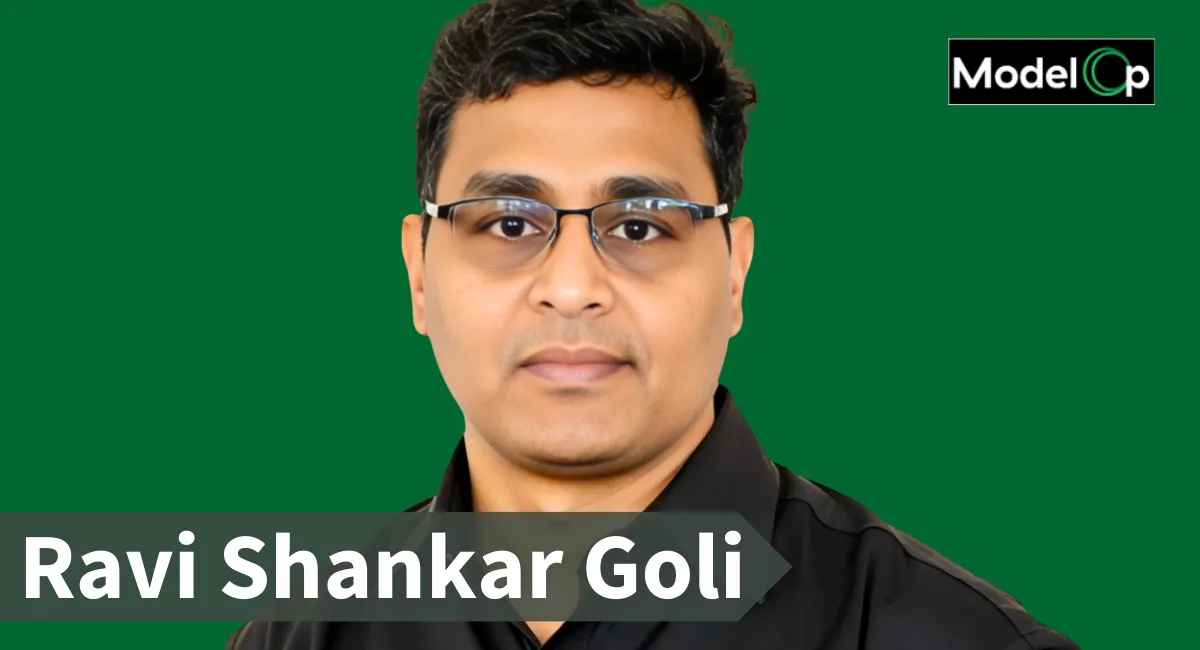
He combines expertise in AI, cloud, IoT, and enterprise systems to lead high impact projects across fintech, supply chain, and retail. A former Indian Air Force technician during the 1999 Kargil War, Ravi brings discipline, vision, and a passion for innovation to every mission. How do you ensure trust in that there's a balance between full human programming and then fully autonomous programming. There's something like with an augmentation.
Ravi Shankar Goli: You need to be aware of what you are doing. Okay, lift the heavy lift just to do all the things. But it's not that he gave you and you accept it and go forward. You have to be very careful.
Do this why review it, understand what he's doing. The first time I use these image cognitive APIs from Google and Microsoft to prove that my daughter looks like me more than my wife.
Jay Combs: Did that end well for you? You're still alive.
Ravi Shankar Goli: That's a good thing. There isn't any.
Jay Combs: It's interesting story actually. Before we jump into today's episode, I want to share something that's going to help you elevate your AI strategy. The 2025 AI governance benchmark report from ModelOp investigates why enterprises struggle to scale AI innovation provides a roadmap to overcome these challenges and will show you how your AI governance practices compare with industry peers. It's free and only takes a second to download.
The link is in the description. Don't miss out. Welcome to the Good Decisions podcast. The podcast about pivotal moments that shape careers, technologies, and the human decision-making behind AI.
Today's guest is Ravi Shankar Goli, the lead principal software engineering manager for Microsoft's Copilot for finance product and solutions. Ravi's journey spans continents with experience in the Indian Air Force, global consulting project with Accenture, engineering leadership and AI at Microsoft. Ravi has three master's degrees uh the most recent in AI and machine learning and uh he is heavily involved with technology mentorship including Microsoft's uh technology education and learning support computer science outreach program. Uh Ravi, it's great to have you here.
Welcome to Good Decisions. How are you?
Ravi Shankar Goli: Pretty good, thank you Jay. Thank you for having me here.
Jay Combs: Fantastic. Let's start uh with a quick introduction. Can you tell us a little about uh yourself and your current role at Microsoft and what exactly a lead principal software engineering manager does?
Ravi Shankar Goli: So it's a like any typical engineering manager leading a Copilot projects as of now in the generative a space. Recently I shifted from other technology to the Copilot and generative AI and we are building this awesome Copilot. My project specifically focusing on the finance domain helping the finance professionals and increasing their productivity with the help of generative AI. Um so yeah I lead a team uh of uh two two features uh we have two features within the product and I lead the team technical thing that mostly focusing on engineering.
Jay Combs: Awesome. Yeah it's pretty powerful technology you know I've used Copilot um several occasions and uh what it can do every you know week to week is just amazing every week. Yeah. And then that the speed is so hard to keep up with even somebody in the industry.
Um and so I think you know folks at you know from Fortune 500 companies to smaller startups or just you know you know people at home running their own small businesses it's really challenging to keep up with what's possible and how to adapt to it. So how is your role changing with the rapid advance of AI within Microsoft and just globally? How do you as a leader stay ahead of some of these groundbreaking technologies and incorporate them into the products and architecture? It's got to be a huge challenge.
Ravi Shankar Goli: It is. It is. It's the super challenging more than the industry. I would say the outside people who see that oh released this one and say but even a step ahead even before that goes out we have to understand what is coming.
Uh these big companies bringing out the model every other day. We hear from the OpenAI, Anthropic and from other part of the globe new models are coming up and when we started this project a year and a half ago we have some understanding what we can do and we venture into certain direction and all of a sudden we hit a road blocks or a wall and at the same time the space is changing every other month. It's too difficult to cope up with it. Uh it's a challenging.
Uh but you're doing pretty good job. I'm right place, right team. Awesome team I have and we are learning fast, adapting fast and doing. Yeah.
Jay Combs: And how large is your team just as an engineering manager? Uh how many folks are on your team?
Ravi Shankar Goli: Uh we have 24 members team. Uh only core team I'm talking about. we have supporting and other thing like any big companies will have the uh whether it comes to governance ethics security policies I'm not counting all those ecosystem and we have business analyst and project managers apart from that we have yeah I mean so yeah there's the direct team and then like you mentioned all the teams especially with AI it's important to have from a you know responsibility perspective ethical perspective all those teams involved do you have I know a managerial framework or decision-making framework that allows you to figure out how to bring in new technology into your engineering process but at the same time doing the things that check all the boxes for all these different teams like it's a really challenging managerial problem if I understand question correctly the bringing the technology to the product or the releasing the product to the outside
Jay Combs: yeah um I think it kind of both like is there a um I'm kind of interested in kind you're if you have a managerial framework or decision- making framework that allows you to just given the speed of the technology how quickly you know Microsoft has to get product out how are you making decisions in concert with info security compliance your engineering team on what can be you know added into the product just from either a roadmap perspective um priority perspective how do you make those decisions to do things the right way while getting products out quickly
Ravi Shankar Goli: That's interesting question. Yeah, definitely the advantage being in companies like Microsoft thing is that we have advantage what is coming and access to these big tech uh generative AI models and everything. uh but we are equivalently very careful about these ethics right like security compliance responsibility AI uh we cannot go fast like any small startups could go quickly uh we have to really careful there so the decision while we are even thinking about the product these ethics and responsibilities part of the uh our decision making at the beginning itself uh we know we have to do these steps. The problem we are facing now is that the model changes, the hallucination style changes, jail breaking and all these things changing and our responsible team they changes their framework.
Challenging for me is that my team need to understand these and get the check boxes fast. Um but yeah, it's a learning process apart from innovation and developing the core product. uh going through this process is not easy but that's necessary that ne for the customers and very important for our end customers and users. Yeah.
Jay Combs: And with your as Microsoft your end customers and users span from individuals to you know the biggest companies in the world in governments and so the I would imagine the needs especially related to GenAI in risk management are so vastly different um especially with Fortune 500 companies like you're in creating a finance product but I imagine a lot of financial services and banks also use these products. How do you incorporate um regulatory or agency guidance like you know the OCC's SR 11-7 and I'm not sure if you're familiar with that particular guidance uh from the Federal Reserve but how do you make sure that your product can can serve both those biggest in the world customers and the smallest ones and make sure that it's done uh with the right regulatory guidance
Ravi Shankar Goli: very important question I would say two parts right one is the regulatory and responsibility checklist that I want to done with my product. But generative has on top of that additional problem of these whether it is doing the things it's supposed to do. And when it comes to finance, it's even complex because these models are very good at understanding the user context and the user uh what they want to do but they're not as good as the with the numbers and mathematics. When you want to do financially is all about number.
If you put one extra zero that 10 millions becomes 100 millions and you cannot say completely dependent on these things how you got profit of 90 million right so uh that one zero will cost. So we are very careful. We understand how this the space is generative space what it can do what it cannot do. Um and we take a hybrid approach take the generative help understand what user want to do where you want to go and take the context of and we use heuristics models or predictive systems uh and combine those marry those and make sure it is 100% right almost 99 right especially the numbers there is no probabilistic thing whether it is right or wrong 9 is 9 8.9 we don't want so that is one thing that mighty responsible 100%.
We make sure it is working perfectly with the numbers on the finance then other the regulatory and compliance things we have good teams to help us uh go through I don't know full inside of the thing is similar to what we used to do yeah you may know like we have these things GDPR and other things that we do HIPAA so now we have this AI regulators on top of it uh and the team helps it we aware of it our teams need to know The surface level what the testing we have to do for the evaluation frameworks we have evaluation framework in place we evaluate we test everything whether it is hallucination jailbreaking quality huge hundreds of test cases even we have evaluation numbers did then there is a team to sign off all this uh it's very important it's a as engineer go it's a painful process is necessary one thing on the regulators and regulations is uh in a way it feels huddle but in a way it is good for us for product. The reason is that if they don't have a centralized regulation, everybody will say my quality benchmark is this one. OpenAI will say something anthropic will say something and everybody come up will say and there is no centralized uh a regulator team that say that hey you have to go through these techniques right so that helps us everybody follow a single regulator singing policies we still evaluate the space is like not GD like GDPR we have a very matured system and this space is just started but governments are creating society is creating and eventually it will way uh place that it is central managed regulations and for us I just need to follow that regulator instead of going at seven or 10 different regulations that's advantage uh but it's changing every other day
Jay Combs: yeah having the certainty in policy you know across you geos uh teams business units products has got to be so critical because I mean otherwise they're chasing a moving target and like you said everybody doesn't have that standard to hold themselves either accountable to or what the right you know checklist is you know obvious I mean regulations are nothing new for technology but as you've gone maybe from more traditional software engineering to engineering that involves variety of uh AI methods and techniques has there been one I guess particular challenge that has stood out from a either development standpoint regulatory standpoint has been really challenging or has required you to learn a new set of skills as you went from more deterministic type uh engineering to probabilistic type engineering. Is there one big challenge that kind of maybe keeps you up at night or has been really hard for you to overcome?
Ravi Shankar Goli: Well, I think you hit the nail that's the biggest challenge we face day from this deterministic to probabilistic. Uh how we prove that the space is infinity, right? We don't know how the end user going to use this product. It's so complex.
Based on talking to some customers, some business enterprises, we get some information. But there are thousand other customers and users are there. We don't know how they going to use it. So we come up with some near perfect try to be near perfect uh evaluation frameworks all those questions that hey these are the questions and out of these thousand questions if you do 950 then we are good or 900 we are good.
But when we go as a private preview or something then the customer he has some specific scenario which is may not work right. So that's definitely new learning for me uh for last two years and on top of that we have these red teamings. Uh maybe you heard about it. Um I need to train my team.
They say red teaming is important. How important? What kind of testing you need to do compared to the previous uh this jet system is easy. You can just write test cases 100% and it's a right or wrong failed or false.
But here is an evaluation thing. We are learning um uh I'm lucky we are at the right place. We have a lot of support from the my company and we are changing. It's a moving target but it is so we are doing pretty good.
Jay Combs: Are you and Microsoft in general I know your CEO is talked about um using generative AI to help you know programmers create code more effectively more efficiently. Is your team using uh generative AI tools to help create these Copilot tools? And uh so how are you doing it?
Ravi Shankar Goli: You mean the using the coding, right?
Jay Combs: Yes, exactly. Yeah. Using whether you know something with GitHub or with you know any of the variety of tools that are out there.
Ravi Shankar Goli: Yes, we do. We do. We do day in day out. I use for in fact my day starts with GitHub Copilot.
We have so many other tools. Everybody have their favorite. I like GitHub Copilot for everything not just coding. Being a developer coming from developer background I write technical document using the GitHub Copilot brainstorming using GitHub Copilot I like it's very easy compared to any other product out there for me even chatting, it's so simple that you can highlight a part tell me this one uh you I want to only make this changes and I speak actually mostly they don't type it now nowadays so I open it whole day I'm using that GitHub Copilot but my team use different tools but we have full access uh specifically coding yes we are using a lot and
Jay Combs: and how do you ensure trust in that I mean obviously I mean there's a balance between full human programming and then fully autonomous programming and there's you know something like with an augmentation uh it's a tool it can help you how do you ensure that what you're writing uh is trustworthy and doing exactly what you want it to do how do you ensure that
Ravi Shankar Goli: if one thing if I learned in last two years is that uh generative way coding is the simplest thing to solve first it increases your productivity 60%. That's what I saw it is like 10x software kind of we can say when I say it is coding is easy to solve over a the history of software like 30 40 years if you take we matured enough that we have all these unit test integration test end to end test and we have all these frameworks to evaluate the code that you generated now it's very easy for me if I know the scenario GitHub Copilot generated a code I take a look at then I ask write the test cases I know my scenario if my all the test cases scenarios are passing or not that gives me 95 90% confident that the code is doing good because I know these 50 test cases they are either pass or fail the code is done what it's supposed to do uh that's the beauty of vibe coding there is a frameworks in the place that to prove that your code is working uh compared to any other kind of text based interaction one output can be 10 variations, right? I speak different like you different output. So that's that's uh I would say GitHub Copilot coding proving it's doing its work.
Jay Combs: So maybe let's move into something a little more um hot button or controversial the topic of vibe coding. Um, I know some people have very differing views on this and in light of some kind of public uh failures like with Replit deleting a production database um the other week. I'm curious what your opinion is on vibe coding. Is there a right way to do it?
Is there a wrong way to do it? Should it be used at all? Uh just love your thoughts on it.
Ravi Shankar Goli: Yeah, before I talk about let me give share one personal experience. uh when I came to Microsoft uh my first team this one one new person joined from the college based out of college we have a process in place at Microsoft uh called just-in-time access in the production systems right and there is some expectation is some expertise on the product seniors will have access and even those don't will not have access to those systems uh unless there is a problem in the production right Somebody has to approve they get an access they go they do the investigation and their access reopened in 12 hours or 6 hours and that's what software follow every operational teams and big companies but this person unknowingly deleted production database uh it's a Sev 0 — alarms on every leadership phone right like you deleted a
Jay Combs: business oh my god
Ravi Shankar Goli: I that's the only time I got a Sev 0 ticket so far in my experience in that uh but interesting thing is that we solve we jumped on it luckily we have backups and restored it took 6 hours so what to do what is missing and everything um that's all visual process the question comes why this person had unneeded access how he it's not the person's not it's not mistake it's the process and the chain of process is at all it's the same when it comes to even these coding that deleted thing um there is systems in place whether a frameworks and things that what to do what not to do for example when I write this vibe coding I have this policy set up in my project never execute delete command never execute remove command and if you have that to delete even a file rename it to backup tell me hey this is I don't want I want to do this when you go and delete it So I can put those policies. These are all frameworks that there if somebody doing thinking that GitHub Copilot write code and do everything end to end we are not there at still humans should be in the loop. It's for sure increasing our productivity 10x that doesn't mean that we don't we don't need uh human in the loop if that's not what we want. we still need experienced people the process of evaluating what it is doing should we give this access or not those are all those are all still we have to take care of so I don't know the depth what exactly happened with the Replit incident I would say the people who set up that terminate part than the uh these tools
Jay Combs: panicinducing story I think anytime you go through something like that I've had a couple instances in my career where there might have And not here at ModelOp but at previous companies where you know there might have been a hack or something and you find out that news and your heart drops and everything of you go into you know how do we fix this in the current situation and then how do you put the controls in place longer term. So something like that never happens again. I'm curious with your background in the Air Force and I do want to get back to vibe coding, but just on this controls process, are there lessons or skills that you've brought from the from the Air Force into Microsoft or into your past roles that have helped really put stronger controls in place? Obviously in the Air Force, you're you're you're dealing with more life and death situations, but still with Microsoft being so prevalent.
The consequences of something going wrong are real. How do you I guess make sure what lessons have you brought from the Air Force to ensure that you have kind of military grade controls to make sure the product is doing the right thing or you don't have somebody deleting a database.
Ravi Shankar Goli: It's interesting experience for me especially there's pros and cons I would say right. uh as you mentioned in the military in air force sometimes there is no scope for failure right in the exercises we do even there is our in uh always we do such a way that there is a war accuracy uh no failure perfect systems that experience gave me kind of advantage and disadvantage I would say when I first started in a course I always wanted a perfect system to develop I think too much about failing and goal that makes me analysis paralysis. I think that goes slow sometimes and it took me a while to understand hey you need not to be really perfect 60 70% is okay they move fast take the feedback come back then pivot but it's not life and death u but depends on project to project J it's not always the it's a generic enterprise project which is not with any any enterprise product is okay but let's say you are in a healthcare product and you need be really careful. What are the chances that it is giving wrong information?
How much accuracy you want it? you don't want to take a 60% and go okay let's see if it works or not and give it to that it's a domain specific healthare even financial things that I'm working u there we I do think about that long-term impact and what where it can go wrong and the long horizon thing though it makes slows down uh I will talk to my seniors understand hey this is what it is it takes a long time and we have to do we cannot go like 60% of the mode. That's the advantages I got from the military background.
Jay Combs: Um I want to go back to vibe coding because I don't think you answered my initial question on it uh before you give me your your anecdote. Um but yeah, vibe coding, do you see it as is as a fad or is there a right time to use it or a wrong time to use it? And I'm just kind of again I know it's controversial but would love your insight on when is the right time to use it, when is the wrong time to use it and do you see it sticking around for the long term.
Ravi Shankar Goli: There is no right or wrong everybody should use. I would say at the same time I am also opposing there some of the CEOs there some of the internet gurus says that it is going to replace software engineer it going to do everything and it is the new thing those I strongly oppose. I strongly oppose that hey it's going to replace whole software engineering at least we are not there yet um I do advanced vibe coding not just github Copilot I use Claude Code for my personal cursor I drive Windsurf right I and trying all these things see which one is doing how where industry is going I'm trying to understand in my experience in last uh six months is that it is doing pretty good job I highly recommend everybody should use it to increase their productivity but believing think that it is going to solve all your problems. No, if you don't have the fundamentals, foundations, you don't know what to asking.
End of the day, the engineer uh or even non-engineer if you don't know what he want, where you want to go, he cannot ask the right questions. It looks simple. Some people say that okay create a website uh one prompt you do that simple simple but enterprise products are way complex it is I would say more complex than uh self-driving self-driving uh single point of failure maybe one can get into problem or we can stop it um but enterprise application goes down it has a big impact so my point is it is real it is doing pretty good job at the same time expecting it is replaces software engineering.
It can do everything. Uh it still hallucinates when you do end to end testing. You don't understand your applications better. You are the one who need to tell it.
You are the one who give the input about architecture solution what to use, what not to use. Um uh without that uh not everybody can become expert. Basically without foundations not everybody can go to complete an enterprise project right that's still software is required that expertise I can share a anecdote recently I shared with one of my conference vibe coding conference if and that and that's why
Jay Combs: I love it yeah please please
Ravi Shankar Goli: u this is a real incident happened with me 2017 actually when I got these glasses I think um I was at office one day And uh uh that week actually whole week I got my eyes are flickering and kind of a headache kind of thing and I think then I consulted the doctor uh diagnosis said a brain tumor. Uh I was super scared didn't tell anybody at home. I consulted again and it's always the same answer. It's a brain tumor.
Who is the consultant doctor? It's a Google. I did a search in the Google and it came back and said that you have a brain tumor.
Jay Combs: Oh wow.
Ravi Shankar Goli: We have asked doctor at the campus I got I was super scared. I went there you don't have any problem. He explained everything and he I told him that what I did and he did set in front of me. He didn't say brain tumor.
So I was thinking what is the difference between him and me. He has a fundamentals foundations. You know what to ask. He has that professional knowledge for me has no experience in the medicine.
I just ask my brain is doing this my this thing and it will say that okay you have this one. It's exactly same with the coding. If you don't know what to ask for you know need to know those foundations I failed in last six months many time it is not doing I think it will do it. If you don't give you don't have that one I pretty sure it's not going to solve your problem.
Jay Combs: somewhat terrifying but I think a common story that I've heard like WebMD has become the bane of doctors since it came out and I'm sure ChatGPT is now doing the same thing to doctors even though I know a lot probably are using it uh but the kind of two things from what you just covered one there's vibe coding there's the risk right like for lowrisk use cases like spinning up a website that's been done millions of times all right maybe that you don't need a ton of knowledge to do that when you get into the higher risk use cases that foundational knowledge is so critical and nothing is going to replace that. I think some of the criticisms of vibe coding is that hey you don't know how it's coding it you don't know what the code is going to look like just based on the output and if you don't have that foundational knowledge like something goes wrong how are you going to debug it how are you going to fix it especially in a high-risk use scenario so what you've said it really resonates like that fundamental knowledge of the architecture of what to do has to be there and it's such a good point and that I mean for your team I obviously you know you're managing other engineers and as their jobs change with AI are you coaching them or giving them advice on how important the fundamentals are and how their job might change in the future? I'm just curious like if the fundamentals are still so important, how does an engineer's job change going forward?
Ravi Shankar Goli: No, I always do talk about with my team at professional level. I encourage them to use the tool at a personal level. Even when I have one-on-one I tell them hey apart from the project apart from thing right you need to be aware of what you are doing a lift the heavy lift just you do all the things but it's not that it gave you and you accept it and go forward you have to be very careful uh do this swipe uh review it understand what is doing whether test cases uh passing everything on top of that you need to know the foundations of the feature and the text stack that you are working on without that u uh you cannot move go far you can start something but you go far you cannot go far so yeah that's my one of the favorite thing to say people hey please learn a little bit actually take the a help learn fast earlier it was Stack Overflow and Google search sheet digest it and uh analyze the data and learning.
Now AI is a good tool to learn. Hey explain this what's happening here. Can you tell me the picture? Explain this is the diagram the diagram you do pretty good job what it did it commits mistakes.
You don't know it committing mistake but you know when it says that I did this one. So we have to use it and go forward.
Jay Combs: Got it. Is that one of the reasons you went back and got a third master's degree like just the continued learning on the fun uh I mean it's not necessarily fundamentals at that point it's you know it's an advanced uh advanced education but that's a lot for anybody how did you keep why did you go back for a third masters for some reason I wanted to do AI for quite some some time uh from the 2015 2016 it's interesting story actually for the first time I used these image uh cognitive APIs from Google and uh Microsoft to prove that my daughter looks like me more than my wife uh because my uh how did that end did that end well for you are you're still alive so that's that's
Ravi Shankar Goli: I didn't know that I until I proved that I did know that she has pro uh higher number of uh u my features compared to my wife but what happens is that when my side family will tell that she looks like me and her side looks like her family tells that like her then I used these comparison image comparison API for the first time and gave the my image and my wife's image and tell me this image how much resemblance to the t and it came 60 by 40 my wife's and see if she looks like me not you
Jay Combs: I was just going to say I'm impressed you're still you're still with us here and that uh
Ravi Shankar Goli: uh so what happens is after that I was curious expert writing a software I know how to do these uh predictions using a classic software I have zero knowledge how this works I don't know anything about it and I start reading about it then it comes back to statistics and mathematics then I want to know little more extra and it oh this is a model that do these things how this works and they did a two-hour certification course to understand it's all mathematics and uh they really liked it okay this is looks cool this technology looks cool um I want to maybe should go deep into that one that's the first thing like in my mind but I kept up with the AI progress since then uh but 2021 even before GPT-3 came actually There is an article came GPT-2 in Guardian. Actually I shared that one. Uh that was the main triggering point. I feel proud that I predicted the what is coming.
um uh they released GPT-2 and one of this MIT student used that one to uh automate writing the blog in a hacking site and without telling that he's a human and that blog become number one for a month later he disclosed it is not me it is written by robot so that is the came in newspaper I think magazine and I saw that one oh this is changing very fast this is doing now next 10 years it is going to be a big change now I have to do some K for sure that's that year I thought okay no more thinking it's been already four years I've been thinking I started it's coincidence soon after I started within a year and a half uh 2020 is November I think uh it's a revolution the actual people got noticed and it become a big crazy That's crazy.
Jay Combs: Did you have a similar epiphany or you know story when you first got into uh software or computers like how did you first get in engineering? Were you always inclined to engineering or was there somebody who introduced you to it? Um I know you're from southern India and just how that journey happened. I'm very curious.
Ravi Shankar Goli: I want to do engineering higher studies for sure. Not sure of computers for sure. That has an interesting instinct with Bill Gates and Microsoft. And that is what encouraged me to do software.
Um I will share that. So as you know, I was in the Indian Air Force I just completed uh my basic training and posted to one of the East India a base uh very remote area. Um I just started my undergraduation BSc mathematics at that time. I wanted to do higher studies.
Uh that motivation came from my mom but I was doing BSc mathematics. This one day I was on my secondary duty night shift uh which you usually do a couple of times in a month and my shift is in kind of a forest woods area as you know most military bases are isolated far away. Was at my post at 1:30 a.m. and I went to the nearby building for water.
There I saw this uh computer cell we used to call EDP electronic data processing unit in the air force. They're secure rooms generally. Somebody forgot to log that room that day. I thought I will close and go to my post but got bit curious went inside and I saw there is this CRT 14in monitor sitting there uh screen shaver going on left to right.
Um it is Windows 98. At that time I have no clue Windows, Microsoft computer, Linux any I have no clue. That is the first time I came so close to the computer. I had just completed my basic training.
Uh I think I touched some keyboards or the mouse, and the screensaver was gone. Uh I was super scared. I thought I broke the computer. I pressed three more buttons.
This white page opened — Microsoft Word 98. And we've been scared things happening. First time touching no clue what it is. I was standing back thinking what should I do first I shall not supposed to enter these room on top of that I broke the computer somebody knows a court martial or something I don't know what will next day I closed the door I walked back while at this uh while I'm going my post that's the time I realized these are cool I should know more about these comput this is the time I read a lot about Microsoft and Bill Gates in the newspaper that he the richest man.
So that's where I think okay I should learn these computers instead of uh my plan was to do electrical or aeronautical aircraft engineering because that's what I do in the Indian Air Force but that shifted the right started from the I went to learn Microsoft office end up learning the programming language C I fell in love with it and it continued uh but yeah that's that's how whole journey started with the software industry now it very nostalgic seeing that god duty night and now working for the Microsoft that Microsoft office product uh basically gave me.
Jay Combs: Wow. So did you have a north star? So once you hey I need to learn more about this you thought you broke a Windows 98 machine in Microsoft Word like was that like hey I am going to follow this and get there someday or is it there was just more the inspiration?
Ravi Shankar Goli: Not at all. I have zero uh aspiration that I will one day work for Microsoft and even I my immediate goal is to complete the goal get a decent job some company even I didn't dream of becoming a software the first thing okay I want to learn computers it happened somehow uh all I know somebody told me oh you have to learn Microsoft office but when I went to that posting center they said we don't offer we offer the program language He you want to learn something is better than nothing and I joined it then I continued understanding what is the language that he that guy actually convinced me that hey Microsoft Office is a product this is the language which is created that whole computer everything that happens inside the computer the is this is the language that you do okay that's he sold me and I start learning all the languages and master degrees how it started
Jay Combs: so you're just a very curious human being. It seems like same with the AI like, "Hey, I just I can compare my wife's picture and my picture and we can, you know, see who our daughter looks more like or hey, I should learn more about this." Like, there's something clearly you're very curious. Were you always like that or was there something in your upbringing that kind of encouraged that?
I'm just curious. Nature versus nurture in your curiosity.
Ravi Shankar Goli: No, no, Jay. Uh but yes from the beginning if anything that I feel cool I want to learn that but for sure it's not that okay this is cool I go even the music oh I liked music a lot then I tried it that's my nature from the beginning
Jay Combs: is that one of the reasons you're involved with uh Microsoft's TEALS like are you trying to pass this curiosity on to students and like how come you're involved with that program
Ravi Shankar Goli: I benefited in my career, as I talked about, from the Air Force and software industry and Microsoft uh but my journey from the village to even air force is something that so I got benefited from these mentors and organizations like nonprofit so I want to give it back to society very widely whether it is back in India or here that's that's the main reason what I can do computer science is my uh strength for sure then I came to know many schools you don't have enough computer science teachers. That's surprised for me. America has that problem. It is Oh, I thought he world's number one country also has these problems.
Uh so I think I can even in the Seattle area. Yeah, even in the Seattle area.
Jay Combs: Again, you're at the epicenter. Yeah. Yeah.
Ravi Shankar Goli: Uh very new to my home. The schools don't have compared to preacher like right. Then I found TEALS. Okay.
they support schools and around 100,000 students uh so far I think u and many schools uh over a period they I said okay this is a place I can go and at least do some difference yeah this is fascinating just the whole journey with how quickly technology is moving to just you know a simple open door can lead you on that journey story but that sticking to something that perseverance is often way harder then that you know initial burst of energy like how do you do this over time and those little things that you do over time really add up and if you can just get started and like have the confidence to come back even though it doesn't necessarily come naturally to you originally like that's such a good skill set to develop and I think is often overlooked for folks especially when technology is moving so fast you need to enjoy you need to find joy and happiness and when you're moving slow you see that I can go there. Some people are smart. They walk fast.
Not everybody. I am not. But I know I can reach there on my own pace and I don't take it out of pressure. The moment you feel it is stressful and not enjoying then you will quit.
That's what happens. I see little bit happiness, enjoyment and doing things what I want to do small small things. Once you have that joy, you find it, you will continue.
Jay Combs: Thank you for that. So when you when you're celebrating or you know you're enjoying something after a hard decision or a hard project or challenge, is there a ritual that you have whether it's uh a meal you cook, something you do with your family or maybe a cocktail that you enjoy to celebrate a job well done or a good decision.
Ravi Shankar Goli: Yeah, definitely. I enjoy with my family go out. One thing is that uh wine with my wife uh sometimes uh or my friends that's one thing we do occasionally uh go some road trip take an RV. I like going for a long drive especially from Seattle to San Francisco is a beautiful drive kind of site.
Yeah.
Jay Combs: Uh but does your team have any rituals uh at Microsoft when you guys celebrate a release? Is there something you guys do to say thank you to everybody or get everybody excited for what's coming next?
Ravi Shankar Goli: Definitely don't do the retrospectives. I don't want to do immediately after the win. Uh uh pause right slow down. I pause myself.
I don't think anyone what is this status? What is that status? And tell the team uh let's slow down this week. Do things that you like want to do.
Let's celebrate the achievement we have. If possible we go out especially here in Redmond we have a beautiful mini golf near to our campus uh in fact one of the most beautiful mini golf by our side was uh I've been many places like but this is the most beautiful mini golf so we go as a team there celebrate
Jay Combs: yeah I believe it yeah that Redmond area is pretty pretty spectacular and just being present I think that's in tech where it does move so fast. Taking the time to breathe and appreciate what has been accomplished because it can feel ephemeral and changing so quickly and to give people the thanks is really important. So, thank you for sharing all of that. U we covered a lot.
It's been fantastic having you on the podcast and thank you for all the wisdom and lessons and good decisions that you've made uh over your lifetime. So, thank you for being here.
Ravi Shankar Goli: Thank you. Thank you, Jay. Thank you for having me.